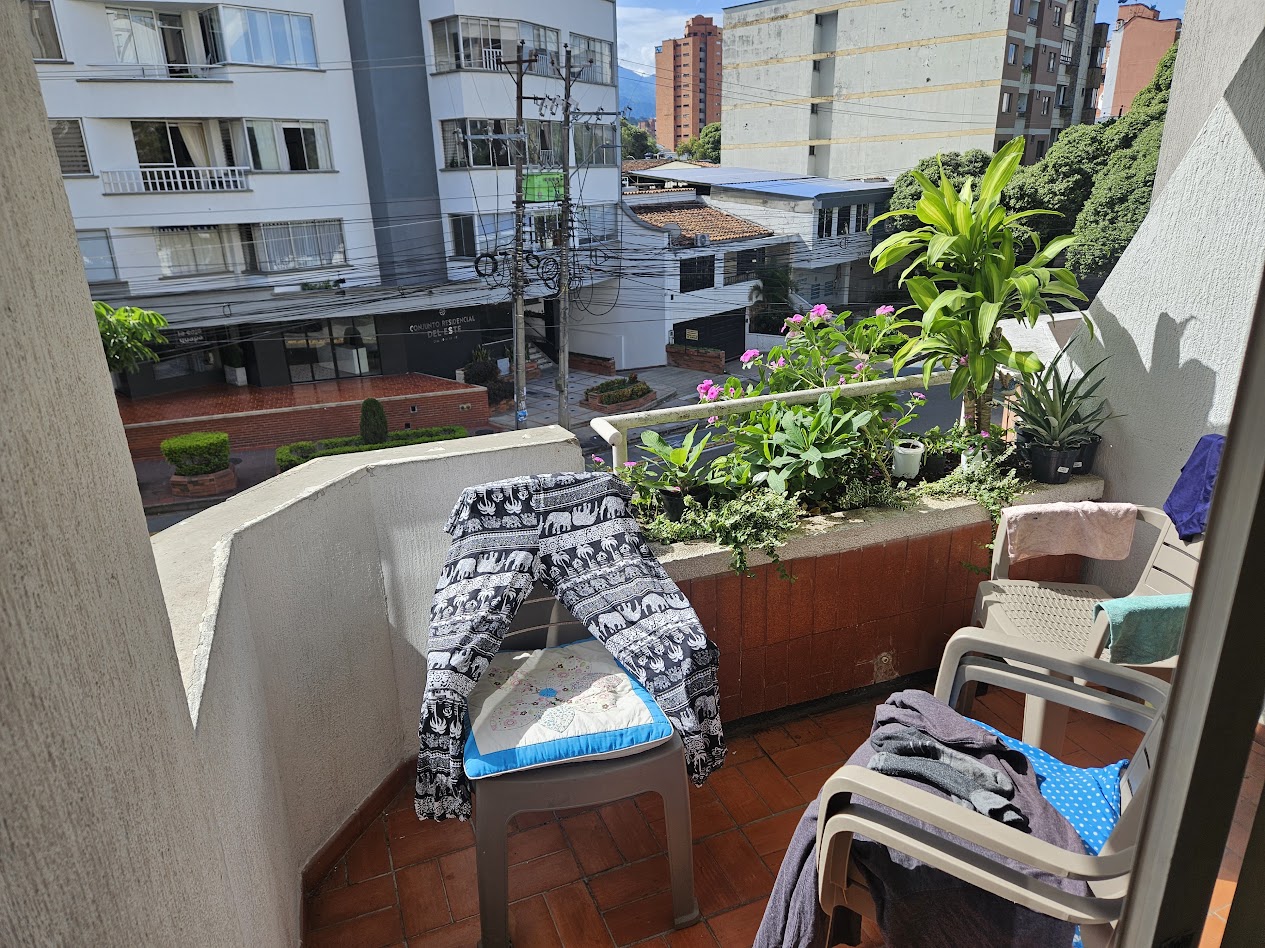
El querido balcón es uno de nuestros lugares favoritos para tomar café, reflexionar y charlar,
registrarse, espiar el baño turco gay de enfrente o simplemente ver el mundo pasar.
Huyendo a Colombia—Tercera parte
Llegamos a Bucaramanga el 23 de junio de 2025, con cuatro maletas, una reserva de un mes en un Airbnb y sin la certeza de haber encontrado aún nuestro hogar definitivo en Colombia. Nuestro único compromiso era darle a esta ciudad colombiana de tamaño mediano la oportunidad de seducirnos para quedarnos.
Había estado aquí dos veces antes, en mis exploraciones preliminares de este país tan diverso; con más frecuencia de la que había visitado la mayoría de las demás ciudades colombianas, excepto Medellín y Bogotá. Michael no.
Esa distinción importaba. Colombia ya había empezado a obrar en mí mucho antes de que vendiéramos la casa y dejáramos Kansas City. Ya tenía recuerdos y amistades. Había pasado semanas caminando varios kilómetros al día, explorando los barrios de Bucaramanga, con el ojo puesto en un nuevo hogar. Ya tenía algunos barrios favoritos marcados y anotados en mi aplicación de Google Maps, y la experiencia suficiente como para creer que Bucaramanga podría convenirnos más que otros destinos más conocidos en este país andino. Tenía un aire muy parecido al de la ciudad que dejábamos. Incluso podía llevar la etiqueta de “zona de tránsito”, una percepción común de Kansas City.
Pero lo que selló el trato, para mí, fue que había hecho algunos amigos muy cercanos aquí. Sí, había hecho amigos en otras ciudades, pero estos amigos eran especiales. Había conocido a sus familias. Habíamos viajado juntos. Insistían en que querían que me mudara aquí y fuera parte de sus vidas. Eso era algo que no había sentido de parte de otros amigos colombianos.
Michael, que aún no había conocido a estos amigos en persona, carecía de mi entusiasmo, mi seguridad y mi confianza, así que me tomó prestadas algunas de esas cosas. Le encantaba Medellín. Para él, esto seguía siendo en gran medida solo una idea por explorar. Una idea loca y aterradora. Su confianza en mí es algo que ahora me asusta un poco y me deja la responsabilidad no solo de mí misma, sino de mi compañero de vida.
Habíamos llegado a Medellín una semana antes y nos alojamos en Laureles para hacernos arreglos dentales. Después de más de un año de explorar Colombia, Medellín se sintió familiar casi de inmediato. Conocíamos lo suficiente las zonas más populares, Laureles, Envigado, Sabaneta y El Poblado, como para tener una opinión al respecto. El Poblado era hermoso en algunos lugares, pero seguía estando al final de mi lista de sitios donde realmente me gustaría vivir. Se sentía demasiado pulido, demasiado caro, demasiado pretencioso y demasiado lleno de extranjeros que buscaban la Colombia que ya se habían imaginado. Era el lugar donde los niños ricos internacionales iban a divertirse. ¿Hace falta decir más?
Bucaramanga iba a ser la primera prueba. El experimento. Era una ciudad ni muy grande ni muy chica. Más tranquila y no tan fácil de alcanzar. Al igual que Kansas City, tenía un aeropuerto internacional, siempre y cuando quisieras volar a Cancún, o a Groenlandia. Desde aquí, el único vuelo internacional es a Ciudad de Panamá, una ruta internacional que evita Bogotá y que más tarde demostró ser una conexión muy atractiva para nosotros desde Kansas City. Ojalá la hubiéramos descubierto antes.
Nuestro conductor, José, nos llevó a nuestro nuevo destino desde Medellín. Casi ocho horas de viaje por carreteras modernas de doble calzada, gran parte de este por el amplio valle entre las principales cordilleras de los Andes colombianos. Las vistas de las montañas se cernían en la distancia, sin las curvas cerradas, dramáticas y a menudo peligrosas que habíamos llegado a asociar con los viajes por carretera en Colombia. Escenas de valles fluviales verdosos se desplegaban alrededor de fincas y pueblos. Fue un viaje de todo el día, lo suficientemente largo como para que los tres nos convirtiéramos, temporalmente, en extraños íntimos. El espacio reducido y la amabilidad y curiosidad típicas de los colombianos por parte de José ofrecieron la oportunidad perfecta para ese tipo de intimidad que me permitió fomentar y avivar la relación afectiva, incluso sensual, que se da con tanta facilidad con los hombres heterosexuales en Colombia. Un estadounidense que nos hubiera observado podría haber batallado para entender eso. Paramos a almorzar en el camino. Al llegar a Bucaramanga, antes de llegar al apartamento, José nos llevó a su restaurante mexicano favorito en Floridablanca.
Luego nos llevó al edificio que se supone que sería nuestro hogar durante un mes.
El maletero nos esperaba. No esperaba todo ese equipaje.
A José se le indicó que condujera desde la calle directamente hacia el área del vestíbulo, donde descargamos, nos abrazamos, le dimos propina y lo vimos desaparecer, no sin antes intercambiar contactos de WhatsApp para el futuro. Nuestro departamento estaba en el tercer piso, con ascensor, lo que parecía una pequeña comodidad en ese momento debido al equipaje, pero que más tarde se volvería mucho más importante.
Ninguno de los dos había vivido nunca antes en un apartamento en un edificio alto. En Estados Unidos, siempre habíamos vivido en casas independientes, con jardín y cierta distancia protectora entre nosotros y la calle. Nuestros viajes por Airbnb en Colombia nos habían enseñado que los pisos altos ofrecían vistas impresionantes, mientras que los pisos bajos ofrecían algo diferente: intimidad con el vecindario. Desde el tercer piso, no nos limitaríamos a mirar Bucaramanga a lo lejos. La veríamos pasar bajo nosotros.
Por el momento, habíamos llegado.
Encontrar el Airbnb adecuado para establecernos durante nuestro primer mes no había sido fácil. Bucaramanga ofrecía un montón de apartamentos en edificios altos, pero muchos de los alojamientos se veían fríos, intercambiables y con precios excesivos. Esto no era Medellín ni Cartagena, pero por algunos anuncios no lo habrías adivinado. Incluso Bogotá tenía opciones más interesantes a mejores precios. Había unidades costosas decoradas para personas que querían vivir dentro de un anuncio de hotel. Había fincas con encanto pero sin relación práctica con la vida que necesitábamos y mal ubicadas para lo que estaba buscando. Había apartamentos en vecindarios que habrían sido agradables pero que habrían dejado a Michael aislado o dependiente de mí para cada mandado cotidiano.
Quería que Cabecera o Sotomayor, las principales zonas turísticas, le presentaran a Michael la ciudad que había llegado a creer que ofrecía lo mejor de lo que queríamos y necesitábamos de Colombia. Quería que estuviéramos cerca de restaurantes, tiendas, parques y médicos, con fácil acceso a pie, el tipo de barrio donde Michael pudiera salir sin sentir que lo habían dejado caer en medio de la nada.
Un anuncio seguía atraíándome.
Tenía tres habitaciones, dos baños, un balcón maravilloso (¡con una jardinera!) y una tarifa mensual que podíamos pagar. En retrospectiva, tal vez el precio debió haberme hecho dudar más. Las fotos no eran glamorosas. Los muebles se veían viejos. La cocina se veía más vieja. Sin embargo, el departamento tenía espacio, luz y algo que no lograba nombrar del todo.
También tenía una imagen enmarcada de Jesús con la corona de espinas arriba de una de las camas. ¡Qué horror!
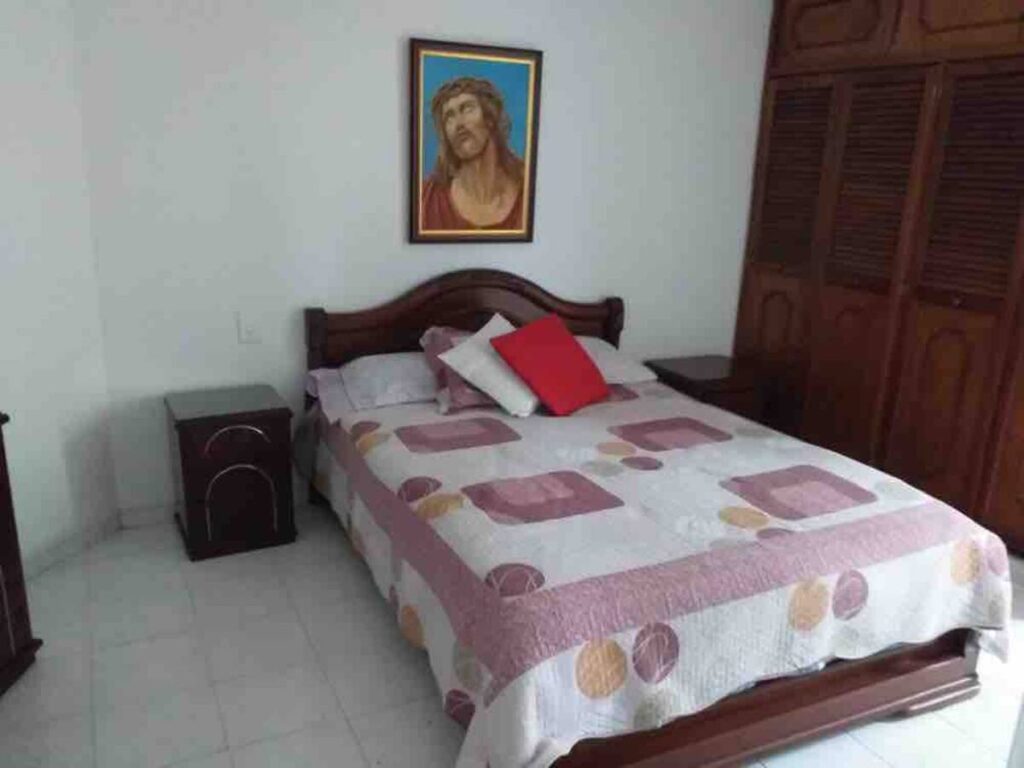
Eso casi puso fin a la discusión en mi cabeza. De hecho, ignoré el anuncio más de una vez, a pesar de que lo había agregado como “favorito” cuando apareció por primera vez, principalmente porque era muy económico.
Pero cuando vi esa fotografía, al instante inventé a los dueños. Religiosos. Conservadores. Tradicionales. Y sin miedo a presumirlo. El tipo de familia que tal vez no tendría problemas en alquilarle a dos gringos mayores, pero que se incomodaría una vez que se dieran cuenta de que esos gringos eran pareja. Ser prejuicioso es un mal hábito que me ha costado caro en más de un sentido, y todavía no he logrado deshacerme de él por completo. Perdóneme señor, porque he pecado.
El anuncio del apartamento seguía atrayéndome de todos modos. Nada más se acercaba a cumplir tantos de los requisitos que tenía en la cabeza.
Cuando llegamos, la imagen de Jesús ya no estaba. En su lugar, o al menos cerca, había una pintura de una mujer atractiva, con la espalda descubierta, sentada en un asiento con vista al océano. Cuando conocimos más tarde a la dueña, Doña Gloria, bromeó diciendo que ella había posado para la obra.
Sin embargo, el apartamento en sí no causó una primera impresión favorable.
Olía terrible.
Las puertas y ventanas al parecer habían estado cerradas durante semanas. El aire era viciado, pesado y vagamente fúnebre. Mi primer pensamiento fue que olía como si una anciana hubiera muerto allí.
Lo primero que hicimos fue abrir todas las puertas y ventanas, prácticamente boqueando por aire fresco.
Casi de inmediato, el apartamento reveló una de sus grandes fortalezas: una ventilación cruzada extraordinaria. El aire se movía por las habitaciones, el calor se disipaba y gran parte del olor comenzó a disiparse.
Los colchones eran otra cosa.
Eran horribles. Tenían al menos 20 años, si no 30 o más. El apartamento tenía tres habitaciones, pero ninguna de las camas parecía apta para dormir de verdad. Lo intentamos de todos modos. A la mañana siguiente, teníamos picaduras de insectos. Los mosquitos eran la explicación más benévola, aunque en ese momento no estábamos del todo seguros. Limpiamos, fumigamos, inspeccionamos y empezamos a redactar el caso de protesta que podríamos presentar a Airbnb.
Estaba profundamente desanimado. Pero no quería empezar de nuevo la búsqueda de otro lugar para mudarme.
Habíamos vendido casi todo lo que teníamos. Habíamos empacado el resto de nuestra vida en cuatro maletas. Habíamos dejado Estados Unidos no para unas vacaciones, sino para comenzar el último gran capítulo de nuestras vidas.
Y ahora estábamos parados en un apartamento maloliente con colchones horribles e insectos no identificados.
Luego, mientras estaba allí sentado y miraba a mi alrededor, tuve un pensamiento familiar debido a décadas de renovaciones en el hogar, proyectos fallidos y rescates improbables.
Este lugar tiene buena estructura.
La cocina estaba anticuada. Los armarios olían mal. Los muebles eran ancestrales. La iluminación era fea. Pero las habitaciones eran generosas. El balcón era maravilloso. La ubicación era la correcta. El aire fluía por el departamento. Había suficiente espacio para vivir separados y juntos, lo cual es uno de los secretos para sobrevivir cuarenta y cinco años junto a otro ser humano.
En lugar de presentar una queja, le envié un mensaje al propietario a través de Airbnb.
El apartamento necesitaba trabajo, le dije. Trabajo considerable. Pero si tal vez estuviera disponible como alquiler a largo plazo, podríamos estar interesados.
La respuesta vino del anfitrión.
Su abuela, la propietaria, estaba ausente en su granja. Regresaría la semana siguiente y sí, quería reunirse con nosotros para hablar de nuestra propuesta.
Así fue como conocimos a doña Gloria.
Era anciana, digna, inteligente y abogada. El apartamento había quedado bajo su cuidado tras la muerte de su hermana y seguía atrapado en la lenta maquinaria de la sucesión en Colombia. Airbnb había sido una solución temporal mientras continuaba el proceso legal.
A Gloria le encantó la posibilidad de un alquiler de un año.
Las negociaciones incluyeron a Bob traduciendo, a María participando y a todos nosotros intentando entendernos a través del idioma, la cultura y las diferentes suposiciones sobre lo que debe contener un contrato de alquiler.
En algún momento, Gloria me miró y me dijo que confiaba en mí debido a algo que vio en mis ojos.
Eso sigue siendo una de las cosas más extrañas y generosas que alguien ha dicho jamás durante una negociación inmobiliaria.
Firmamos un contrato de arrendamiento.
Entonces Gloria hizo algo que casi ningún propietario estadounidense habría hecho.
Nos dio permiso.
Podríamos sacar los muebles viejos y comprar los nuestros. Podríamos pintar. Podríamos remodelar. Podríamos hacer pequeños cambios físicos. Podríamos recibir invitados. Podríamos aceptar a un compañero de piso. Podríamos tener mascotas. Nos impuso muy pocas restricciones, más allá de la obvia expectativa de que no destruyéramos el departamento.
Ella les dio a dos hombres homosexuales de edad avanzada de Misuri casi total libertad para remodelar la casa de su hermana.
Casi lo usamos todo.
Bob y María vivían al lado, y su presencia se convirtió en uno de los grandes encuentros accidentales de nuestra llegada. Ellos habían vivido antes en nuestro departamento y conocían cada alacena, reparación, defecto y trozo de historia asociado a él.
Bob era de ascendencia puertorriqueña, dominaba el inglés y el español, y enseñaba inglés. María era venezolana. Entre los dos, entendían el apartamento, el vecindario, la burocracia colombiana y los muchos sistemas prácticos que permanecen invisibles hasta que un extranjero necesita uno.
Nos asesoraron sobre bancos, seguros, documentos, problemas del hogar y los mil pequeños interrogantes que implica empezar de nuevo en otro país. Nos recomendaron restaurantes cercanos, así como algunos que debíamos evitar. Sus consejos sobre atención médica no siempre fueron tan confiables como supusimos en ese momento, pero en esos primeros meses fueron invaluables.
Varios meses después, circunstancias familiares dictaron que Bob regresara a los Estados Unidos. María volvió a vivir en Venezuela hasta que pudieran reunirse en algún momento en el futuro. Su partida cambiaría el ritmo del tercer piso, pero para entonces ellos ya habían ayudado a hacer posible nuestra llegada.
La primera tarea fue la limpieza.
Suli y Javi, que se habían ganado el derecho a afirmar que eran la razón principal por la que quería elegir Bucaramanga como un nuevo hogar, pasaron días ayudándonos a vaciar alacenas, tallar baños, limpiar detrás del refrigerador, atacar los clósets y quitar años de mugre de lugares que ninguna fotografía de Airbnb había mostrado.
Luego pintamos.
Utilicé la inteligencia artificial para ayudar a desarrollar una paleta de colores, supuestamente inspirada en Colombia. La ajustamos, discutimos sobre ella, vivimos con ella y cambiamos de opinión como solemos hacerlo en cualquier proyecto de remodelación.
El apartamento contenía una habitación de forma extraña junto al pasillo que conectaba los dormitorios y el baño público, un espacio que parecía no saber lo que quería ser. En su día había tenido un televisor y un sofá. Yo lo llamaba la alcoba. ¡Acabo de contar siete superficies de pared distintas, además de una enorme columna en una esquina que define esta habitación mientras escribo esto!
La alcoba se ha convertido en mi oficina y estudio, el territorio no tan pequeño y no tan privado desde el cual puedo escribir, pensar, editar, hablar demasiado y, de vez en cuando, esconderme.
Compramos unidades de almacenamiento económicas de paquete plano, escritorios, estantes y muebles prácticos. Era esa clase de porquería barata que odio porque no durará ni un año sin verse ajada y dañada, con solo atreverse a poner una taza de café encima. Reemplazamos los tres colchones —dos matrimoniales y uno individual—, pero conservamos las estructuras de las camas existentes. Los viejos roperos de madera seguían guardando el olor a humedad de otra época a pesar de nuestros esfuerzos por sepultar el hedor pintándolos.
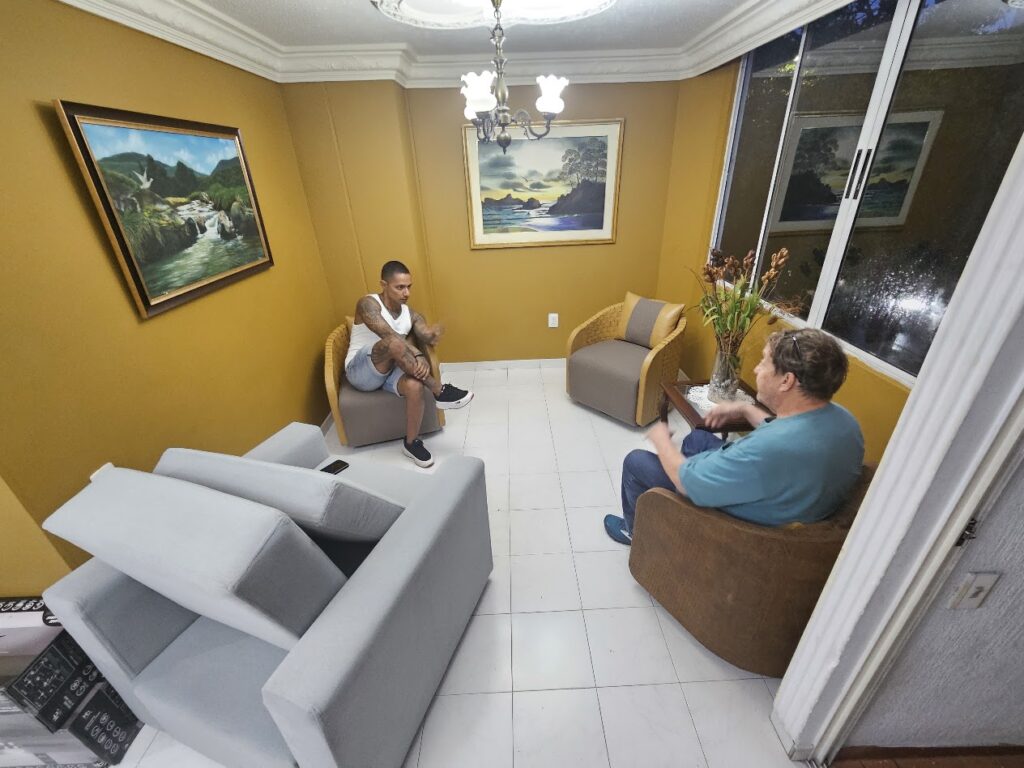
La sala resultó ser más desafiante, a la vez que terminó siendo la habitación más gratificante de la casa.
Compramos un televisor enorme. Soy un maestro en justificar el gasto de dinero, si creo que hay un retorno. La curva en los precios de los televisores hizo que me fuera más fácil justificar la pantalla grande. Un año después, tengo pocos arrepentimientos. Aunque no soy un gran consumidor de televisión, Michael pasa horas todos los días viendo algo en ella. Cuando nos visitan invitados, hemos entretenido con películas y series de televisión eclécticas (¿Murderbot, alguien?). Hemos organizado fiestas de la Copa del Mundo y partidos de fútbol colombiano que rivalizan con cualquier bar deportivo.
Encontramos sillas giratorias de cuero que eran mucho más caras que la mayoría de los muebles de aglomerado que habíamos comprado. Me alejé y seguí buscando, solo para tragar saliva y hacer un gran esfuerzo para invertir en ellas. Me dije a mí mismo que los muebles durarían más que yo.
Luego, en otra tienda de muebles de calidad a menos de una o dos cuadras de distancia, encontramos el sofá cama que en realidad no es un sofá, pero así es como lo llaman aquí. Piensa en un sillón reclinable, tal vez.
A Michael no le encantó al principio.
Era demasiado grande, de corte cuadrado, no muy atractivo, pero vaya... era cómodo y versátil. Silla, reclinable, cama, todo en uno. Y podía ver cómo le hacía espacio en el salón.
Le pedí a Jackson y a Juan que subieran esa maldita cosa por la calle hasta el departamento. Creo que por ahí tengo un video de ellos arrastrándola por la banqueta, esquivando a los peatones y las entradas, mientras yo supervisaba de la manera útil de un hombre mayor que se había ingeniado para no pagar la tarifa de envío.
Fue un golpe de suerte memorable, y muy colombiano.
El sofá se convirtió en el asiento más codiciado del departamento.
Hasta Michael llegó a quererlo. Los huéspedes se lo apropiaban. La gente se tendía en él, veía películas, dormía, conversaba, comía pizza y daba y recibía masajes en él. El mueble que inicialmente había generado más dudas se convirtió en el objeto en el que todos querían sentarse, recostarse o acostarse.
Quitamos las espantosas lámparas de araña e instalamos seis ventiladores de techo de perfil bajo con luces. Guardamos los accesorios de Gloria para poder volver a colocarlos si nos mudábamos, llegado el caso. Los ventiladores mejoraron la luz y mantuvieron el aire circulando por el departamento, aunque los techos eran lo suficientemente bajos como para que los visitantes más altos chocaran ocasionalmente con las aspas usando la cabeza. ¡Ay!
Hicimos lo que Michael y yo habíamos hecho una y otra vez a lo largo de nuestra relación: transformamos una propiedad descuidada y de bajo rendimiento en un hogar hermoso y cómodo. Tener un lindo hogar es probablemente una de las cosas más importantes en cualquier relación. Pero ese proceso familiar en sí mismo —la danza de renovación que realizamos para transformar un Airbnb feo en un espacio cálido y amoroso— fue lo que ambos necesitábamos para darnos una sensación de pertenencia a Colombia y a Bucaramanga. ¿Cómo no íbamos a sentirnos en casa después de poner tanto esfuerzo y amor en ayudar a que un espacio feo y descuidado se convirtiera en el hogar elegante que siempre había sido?
Hicimos gran parte de este trabajo físico sin pensar en nuestras limitaciones físicas.
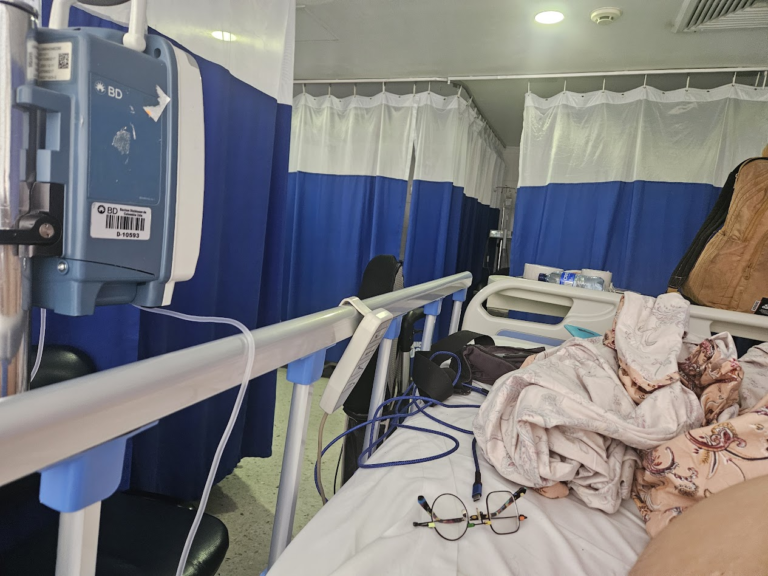
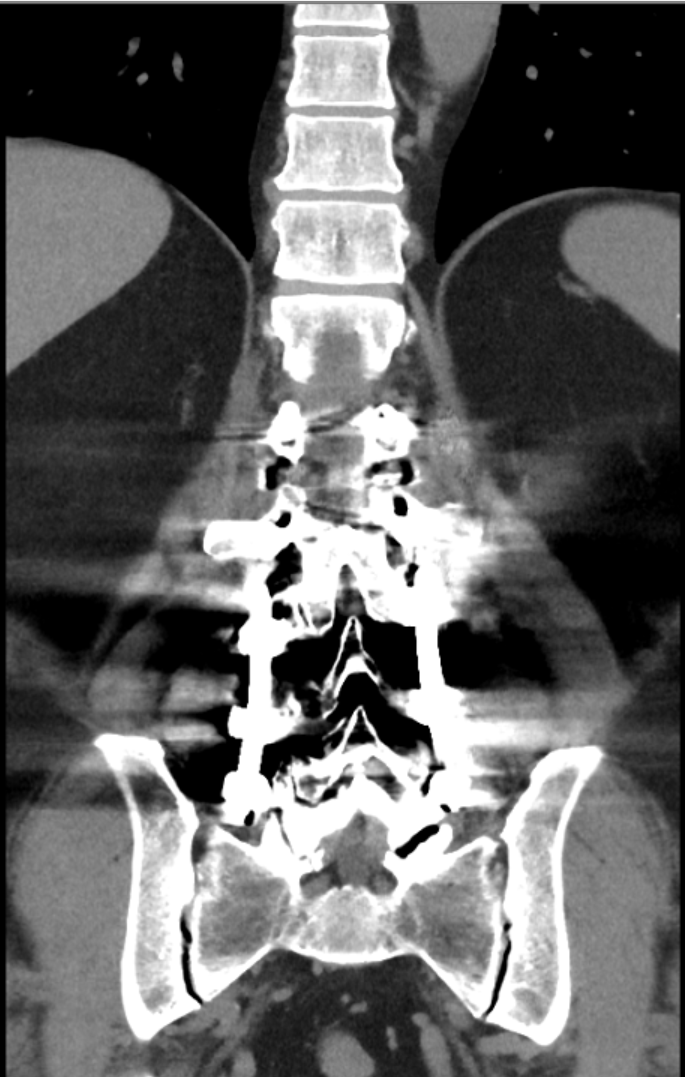
Sé que me dolía la espalda. Probablemente estaba tomando Tylenol como un desquiciado. La lista de cosas que ya no podía hacer y las tareas que asignaba a cuerpos más jóvenes iba en aumento. De forma gradual, por lo que era más fácil ignorarla. Nos movíamos más despacio. Trabajábamos menos horas al día. No había razón para apresurarse, lo cual es algo muy bueno en Colombia. El dolor seguía siendo parte del clima en lugar de ser el tema del día.
Mudamos muebles. Compramos. Pintamos. Nos agachamos. Nos estiramos. Caminamos. Subimos. Reorganizamos. Cargamos las compras a casa. Tomamos decisiones de pie.
No hubo un momento en que pensé: Mi cuerpo está a punto de reorganizar nuestras vidas.
Simplemente me adapté al dolor de espalda que conozco desde gran parte de mi vida.
Ese período ahora parece casi atlético en comparación con lo que vino después.
También estábamos construyendo nuestra nueva vida fuera del apartamento.
Este fue mi segundo desfile del orgullo LGBTQ en Bucaramanga.
Ninguno de los dos tuvo ningún problema en caminar con nuestros nuevos vecinos y nuestra familia queer.
Poco después de llegar, fuimos al Orgullo Gay y marchamos con Javi y Suli. Celebramos mi cumpleaños durante ese primer mes. Caminamos por toda la ciudad. Le mostré a Michael los barrios que recordaba y que tenía anotados de visitas anteriores, incluido Provenza, cuyo nombre me costó recordar más tarde. Recordaba una o dos cuadras especialmente encantadoras allí, aunque nunca encontré suficientes como para hacer que el barrio compitiera con Cabecera en mi imaginación.
Otra de las grandes promesas de Bucaramanga no había sido meramente la ciudad misma, sino Santander.
El departamento estaba lleno de pueblos, caminos de montaña, cañones, iglesias, plazas y lugares que parecían lo suficientemente cerca como para convertirlos en excursiones de fin de semana. Me imaginaba recorriendo pueblos juntos: descubriendo localidades, comiendo en restaurantes pequeños, deambulando por plazas y coleccionando lugares favoritos.
No hicimos ni con mucho tanto de eso como yo había tenido la intención. Siempre parecía que otra cosa nos reclamaba.
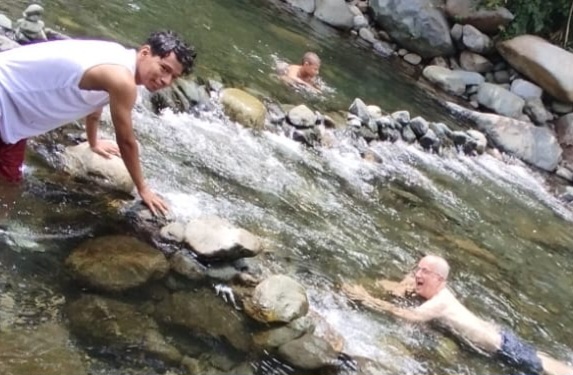
Fuimos a El Carmen a visitar la zona donde crecieron Javi y Suly. Vimos lo suficiente para saber que la promesa era real. Pero la mayoría de esos viajes se quedaron en planes para más adelante.
En ese momento, el después parecía abundante.
Ese es uno de los lujos de una nueva vida. El futuro todavía parece contener todo lo que aún no has logrado hacer.
El apartamento rápidamente dejó de sentirse como un alquiler.
El balcón ayudó.
Daba a una calle llena de movimiento. Había restaurantes, un salón de belleza, una tienda de regalos, consultorios médicos, gente haciendo fila, motocicletas de reparto, taxis, peatones, trabajadores, residentes y visitantes. En algún lugar dentro de esa vida comercial ordinaria y dentro de nuestro campo de visión desde el balcón había también un discreto baño turco gay, porque Colombia siempre ha tenido espacio para una pequeña contradicción.
El exclusivo Hotel Dan Carlton se veía cerca.
Miles de personas pueden haber pasado debajo de nosotros en un día ajetreado. Soy sordo, por lo que el ruido me llegaba de manera diferente a como le llegaba a Michael y a los visitantes. Lo que otros podrían haber experimentado como tráfico o conmoción se convirtió, para mí, en vida visible.
Los domingos y los días festivos, que eran muchos, representaban pausas tranquilas y silenciosas.
Comencé a reconstruir la jardinera del balcón.
La siembra original era aceptable. Ese era precisamente el problema. Arranqué todo, renové el sustrato y volví a empezar. A lo largo de varios días, con la ayuda de la inteligencia artificial y de los viveros locales, elegí plantas que se adaptaran a la luz, al clima, a la arquitectura y a mi propia incapacidad de dejar las cosas como están.
El balcón ya se había convertido en nuestra salita matutina. Las nuevas plantas lo transformaron y enviaron un mensaje fresco a la calle y a los apartamentos de enfrente: ¡Mírennos!
Michael y yo bebimos café allí. Observamos la escena callejera, comenzando antes del amanecer. Nos pusimos al día el uno con el otro. Hablamos de dinero, planes, amigos, sexo, salud, muebles, errores y de lo que fuera que tuviéramos en mente, incluyendo lo que pensábamos que estábamos haciendo con el resto de nuestras vidas.
Vecinos a los que nunca habíamos conocido formalmente empezaron a saludarnos desde los apartamentos al otro lado de la calle. El restaurante local recibía con agrado nuestros no infrecuentes pedidos de caldo con res para el desayuno. Entregado en nuestra puerta.
Esos pequeños gestos importaban.
Ya no éramos extranjeros anónimos que ocupaban un balcón temporal. Nos habíamos convertido en los dos viejos gringos con las plantas, un flujo de visitantes a veces aparentemente interminable y la costumbre de ver despertar al vecindario con nuestras tazas de café.
Al principio no me había agradado la idea de los porteros. Tener a alguien que me abriera la puerta se sentía vergonzosamente ostentoso, y tener un escritorio que registraba cada llegada y salida se sentía como vivir con Gladys Kravitz apostada en el vestíbulo. Me preocupaba la privacidad y me desagradaba la sugerencia de que necesitábamos que nos sirvieran.
Luego, pequeños gestos comenzaron a cambiar la relación. Dejábamos una empanada extra de camino, una barra de chocolate, una Coca-Cola, a veces una cerveza. Al parecer, la mayoría de los colombianos y residentes de larga data no hacían eso, así que los porteros notaron que los gringos sí. Los nombres reemplazaron a los uniformes. Las conversaciones reemplazaron a los saludos con la cabeza.
Con el tiempo, aprendieron cuándo interrogar a alguien que recién llegaba de visita, fuera invitado o no, cuándo advertirnos, cuándo proteger nuestra privacidad y cuándo guiñar un ojo y mirar hacia otro lado. Les preocupaba que confiáramos demasiado y nos decían cuándo pensaban que alguien podría estar aprovechándose de nosotros. Su preocupación era genuina. Uno por uno, las personas que custodiaban la entrada se convirtieron en nuestros amigos, y en parte de lo que hacía que el edificio se sintiera como un hogar.
Más de un mes después de mudarnos, uno de los porteros preguntó si alguna vez habíamos estado en la azotea.
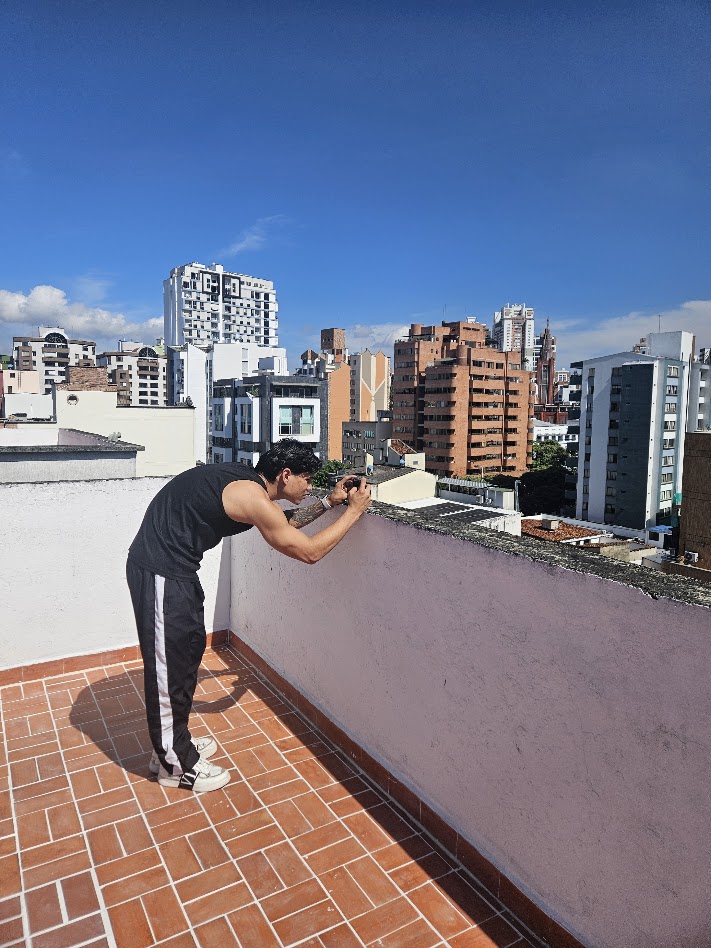
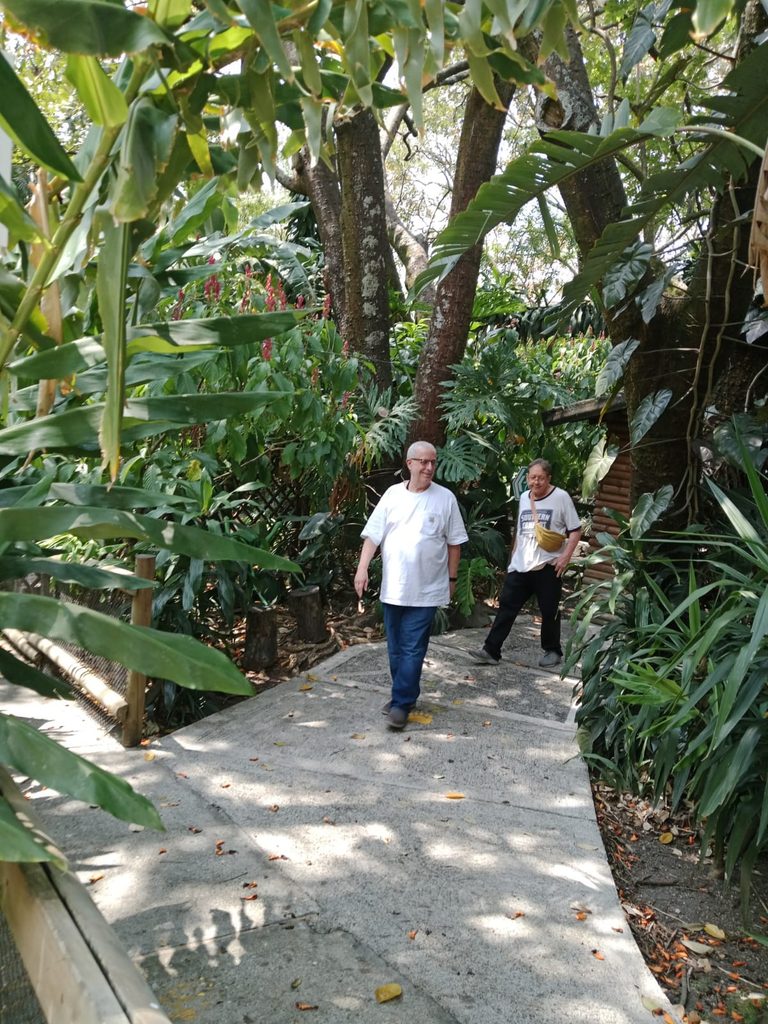
La terraza de la azotea era un lugar imperdible para todo visitante. La vista de la ciudad es asombrosa e impresionante.
Era el centro de las oportunidades para fotos. Ningún invitado o visitante escapó de nuestras propias cámaras.
No lo habíamos hecho. Ni siquiera sabíamos que existía un lugar así.
Nos dio acceso, y descubrimos una enorme terraza en la azotea cubierta de baldosas con vistas panorámicas de Bucaramanga y las montañas circundantes.
La ciudad se abrió a nuestro alrededor por tres lados.
La azotea se convirtió en otro lugar de encuentro, otro sitio para llevar a los visitantes, otro fondo para las fotografías. Los invitados subían y posaban con las montañas a sus espaldas. Bucaramanga se veía inmensa, hermosa y completamente accesible para nosotros.
El apartamento en sí se convirtió en un lugar de reunión.
Amigos nos visitaron desde Cali, Armenia, Pereira, Medellín, Ibagué y otras ciudades. A veces por dos o tres días. A veces por semanas. Amigos de Bucaramanga venían regularmente. La gente se quedaba, comía, hablaba, veía televisión, jugaba cartas y ocupaba el sofá. Nos ayudaban a mudar muebles, limpiar los baños o preparar comidas.
Pedimos pizza. Vimos películas. Organizamos esa clase de veladas informales que no parecen significativas mientras ocurren y que después se vuelven la sustancia de la memoria.
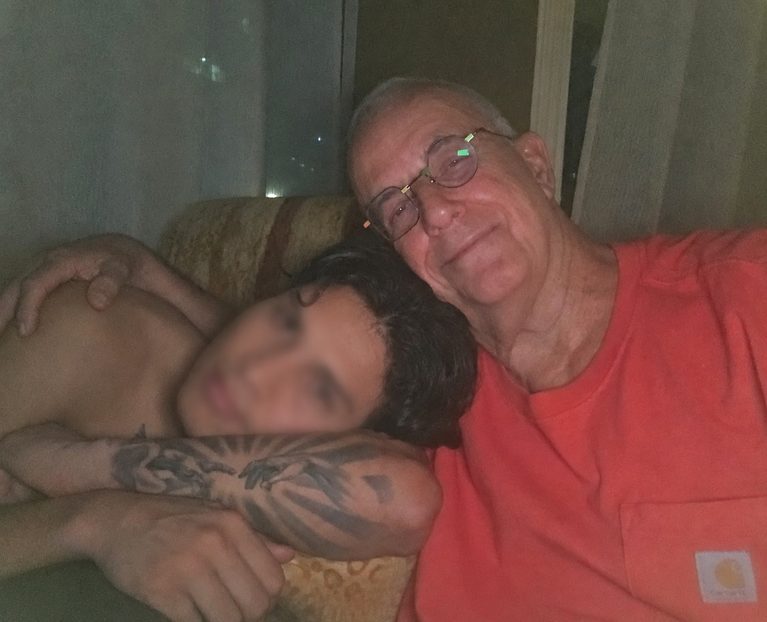
Celebramos el septuagésimo quinto cumpleaños de Michael allí el Día de Acción de Gracias. Iván, Linda y Alegría, los nuevos vecinos que habían reemplazado a Bob y María al lado, se unieron a Junior, Juan, Javi y Suly. Iván llegó con su guitarra, y el apartamento se llenó de música y cantos colombianos. La celebración no necesitaba ser grandiosa para importar. Era el primer cumpleaños de Michael en la nueva vida que habíamos elegido: amigos reunidos a su alrededor, apareció comida, se tomaron fotografías y el apartamento los acogió a todos. La sonrisa en el rostro de Michael cuenta la historia mejor de lo que yo puedo hacerlo. Para un hombre que había llegado sin experiencia en Bucaramanga y sin la seguridad de que alguna vez llegaría a sentirse como en casa allí, la ocasión significó más de lo que un pastel o un número de velas podrían explicar.
Más temprano ese mismo día, habíamos celebrado el Día de Acción de Gracias gringo en un restaurante cercano propiedad de gringos.
El Día de Acción de Gracias es una festividad peculiar de recrear en otro país. Es en parte nostalgia, en parte ritual, en parte la insistencia de que las personas que te rodean son ahora lo suficientemente familia como para compartirla.
No estábamos intentando fingir que aún estábamos en Kansas City. Estábamos creando una festividad en Bucaramanga usando las personas y las posibilidades que teníamos a nuestra disposición. La comida se trataba menos de reproducir Estados Unidos a la perfección que de descubrir que el sentido de pertenencia podía viajar. Hice pay de calabaza para la comida compartida.
El cumpleaños número setenta y cinco de Michael y el Día de Acción de Gracias, al coincidir en el mismo día, pasaron a formar parte del nido.
Así también la regadera eléctrica, que hasta el día de hoy me sorprende por su eficiencia, si no es que por sus mágicas propiedades de masaje. El truco para tener agua más caliente es usar menos agua. ¿Qué tan aleccionador es eso?
Así terminó la confusión interminable con las entregas: ¿El conductor estaba abajo, afuera, en otro edificio, o llamando al hombre sordo que había pedido explícitamente un mensaje de texto?
Así también lo hicieron los maleteros, las tiendas cercanas, los Uber, los vecinos, las plantas, los muebles y la acumulación gradual de conocimiento ordinario.
Aprendimos dónde comprar cosas.
Aprendimos a quién preguntar.
Aprendimos qué calles eran fáciles, qué colinas no, qué restaurante hacía entregas a domicilio y cuánto podía significar realmente “ya voy”.
Aprendimos cómo respiraba el edificio, cómo la luz del sol cruzaba las habitaciones y qué ventanas abrir cuando el departamento se ponía cálido. Qué ventanas cerrar cuando llovía.
El departamento se volvió nuestro no porque fuéramos dueños de él, sino porque nuestras rutinas empezaron a caber dentro de él.
Incluso recibimos el derecho de preferencia para comprar el apartamento si alguna vez quisiéramos.
En ese momento, esa posibilidad se sentía menos como un cálculo financiero que como un cumplido. Habíamos venido por un mes. Habíamos firmado por un año. Ahora podíamos imaginar la permanencia.
Durante esos primeros seis meses, Colombia dejó de sentirse como un experimento exótico y comenzó a sentirse como un hogar. Dejamos de movernos por ella como turistas y empezamos a vivir en ella como residentes; residentes extranjeros, sin duda, pero residentes al fin y al cabo.
Con casi cero excepciones que pueda recordar (a excepción del grafiti que exhortaba “Gringo Go Home”), Colombia nos aceptó. Nos dio la bienvenida, nos acogió y pareció amarnos con la misma generosidad con que nosotros la amábamos a ella.
No nos habíamos mudado aquí en busca de lujo. Habíamos querido algo más simple y más difícil de explicar: llámalo ancho de banda, por falta de un término mejor, supongo.
Queríamos suficiente margen en el presupuesto y en nuestras vidas para comer bien, tomar Uber, ir al médico si teníamos que hacerlo, contratar ayuda a veces, ir al dentista, hacernos pedicuras y manicuras, hacer amigos, comprar plantas, celebrar cumpleaños, recibir un masaje y, de vez en cuando, mejorar algo simplemente porque nos haría más felices.
En Estados Unidos, esas comodidades ordinarias habían empezado a parecerse a un lujo.
En Bucaramanga, caben.
Todo parecía estar funcionando.
Habíamos encontrado el apartamento.
Habíamos encontrado a Gloria.
Habíamos encontrado amigos.
Michael se estaba adaptando. Yo estaba encantado. Las habitaciones estaban llenas. El balcón estaba creciendo. Los vecinos saludaban con la mano. Las montañas esperaban sobre los tejados. Santander seguía lleno de pueblos que seguramente visitaríamos más tarde.
Creíamos que habíamos tomado la decisión correcta.
Durante un tiempo, pareció obvio que lo habíamos hecho.
Mantente atento a la Parte 4, próximamente.