Sexual Intimacy, Desire and Promiscuity at Seventy
How many times does one man have to come out? I came out of the proverbial closet the first time when I was young enough to believe that being gay was probably the worst thing that could happen to me. I had already tried being born again. That didn’t take the first time either, and I’ve now been born again so many times that I’ve lost count. Never stop being born again. As many times as it takes.
That sounds flippant, but it isn’t. I had been caught up in the Jesus movement and became a born-again Christian. Somewhere in that young, terrified brain of mine was the idea that if I were good enough, faithful enough, surrendered enough, Jesus would cure me of being sexually attracted to other men. Jesus apparently had other plans for me. But that experience did give me a line that has served me well since: I can express sympathy for those who have been born again only once.
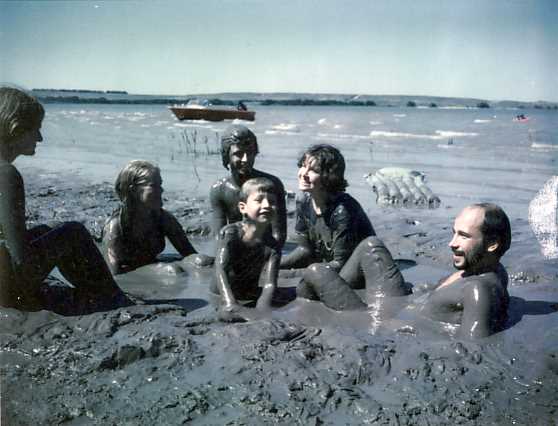
Even though the subject was never mentioned when I was young,
something always seemed obviously different to me when they came home
from their lives at college or work with same-sex “friends”.
I was, if nothing else, a Momma’s Boy. Eventually I worked up the courage to tell my mother. I was maybe eighteen or nineteen years old. I didn’t write it down in a calendar. What I do remember vividly is being afraid of losing her love. I remember crying. I remember finally sobbing the words: “I’m gay.” And I remember my mother relaxing, pulling me into her embrace as she joined me crying and saying, “It’s okay. I know.” Then she said something I have also repeated dozens, if not hundreds, of times since, almost like a mantra: “I don’t understand it, but I accept you.”
My mother didn’t know that she was giving me a philosophy for the rest of my life. She wasn’t trying to be profound. She was just being my mother. You don’t have to understand something to accept it. Imagine that. It could solve more than a few problems.
My parents had already survived my brother Gordon coming out. My sister Merrilee had come out to them too. I was the third of six children to join the homosexual conspiracy, so by the time they got to me perhaps the Barnett family had developed procedures. I was one lucky queer farm boy. It’s only a slight stretch to say that Mom became something like the unofficial PFLAG chapter of Colby, Kansas, for other queer boys before I even knew what Parents and Friends of Lesbians and Gays was. Gay boys sought her out and talked to her. Parents sometimes did too. The vaunted secret gay rumor mill was functioning even in rural Kansas. Click your heels, Dorothy. Mom seemed less worried about my homosexuality than about what other people might do to me because of it.
She was perhaps not entirely wrong to worry in this less-than-mystical conservative corner of rural America. But something important happened when I started saying those words out loud: the secret lost some of its power. That doesn’t mean I immediately became Harvey Milk. There were a lot of baby steps that had to happen first.
Sedona, Arizona. Denver. Bars. Gay men. Sex. I wasn’t a virgin, but I was inexperienced and naive. I had dabbled with exploration with my peers, even as a young teen. Boys will be boys, in town, and especially growing up on a farm. And that wasn’t my first experience with sexual arousal from men. My first love affairs were the models in the men’s underwear section of the Montgomery Ward catalog, so thoughtfully delivered to our rural home. Tell me that I was the only one.
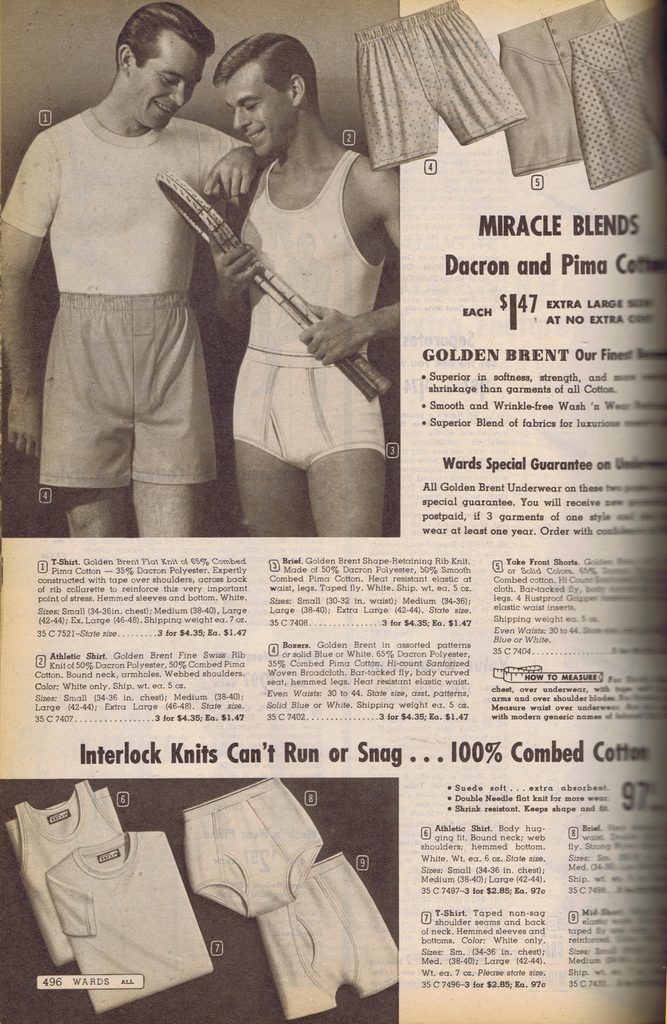
Montgomery Ward catalog underwear section.
But as a young adult, things changed. When I first came out of the closet, I thought I was going to fall in love with one guy and live happily… and monogamously… ever after. I thought the sex would be fantastic and somehow the same thing as love. Just like my black-and-white television role models, Ward and June Cleaver. Or, closer to home, Mom and Dad.
Hardly. When I first started meeting gay men in bars, they were already far more carnal than I was. The sex was fine—good enough to keep going back for more—but after the climax, it left me feeling terribly unfulfilled because I also wanted it to be love, whatever that was.
I left Denver to live with and work for my other gay sibling in Kansas City. Merrilee and a partner operated a remodeling business called Housework. Merr had broken her arm and needed some help. I needed a new break. By then I had adjusted my expectations about my sexuality. I had not given up on love, exactly. I had simply stopped expecting every sexual encounter to deliver it.
That distinction would become important later, when Michael and I became friends first. I liked him enough that I was reluctant to turn the relationship immediately into a sexual one. We could sleep together, spend time together, go to the lake, go camping, and let the rest happen when it happened. Am I sounding a touch heteronormative yet? I hardly think so. I was trying to find a way to build a relationship that would work for me and a life partner. Maybe two. In my twenties, there was a third companion sharing the life that Michael and I were starting to build.
Kansas City was different. I used to call it a little town all growed up. I remembered Phoenix and Denver as cities where I passed people looking ahead at the sidewalk in front of them instead of at each other. Kansas City still had some of the manners of the small-town Midwest that formed my identity. Maybe because so many folks moved there from surrounding small, rural communities to advance their fortunes while farming abandoned families as it started to “go corporate” for profit. People acknowledged one another. You could still imagine somebody lifting a finger from the steering wheel as you passed on a country road in their pickup truck. It wasn’t San Francisco. And it wasn’t New York. But Kansas City had a quietly thriving gay, and even more so, lesbian community and played a real role in the history of the U.S. gay rights movement.
Not just bars and baths, although gawd knows we had those. There were organizations, phone trees, newsletters, bookstores, outdoor clubs, parties, political groups, cruising parks and the Metropolitan Community Church, one of the older Christian congregations in what became an international denomination. MCC was important to me in ways I probably under-credited for years because I have chosen to reject all things religious in my adult life. It was the first real gay community I belonged to.
MCC insisted that it wasn’t a “gay church,” merely a church welcoming to gay people. Okay. Whatever. It was a gay church. And thank the Goddess for that. For young people questioning their sexual or gender identity after enduring their repressive conservative Midwestern religious upbringings, MCC was a welcoming way station. We arrived carrying all the baggage that conservative Christianity had laid on us to carry, like a cross, discovered that homosexuals could apparently drink coffee in a church basement without bursting into flames, met one another, socialized and then went off to live our lives.
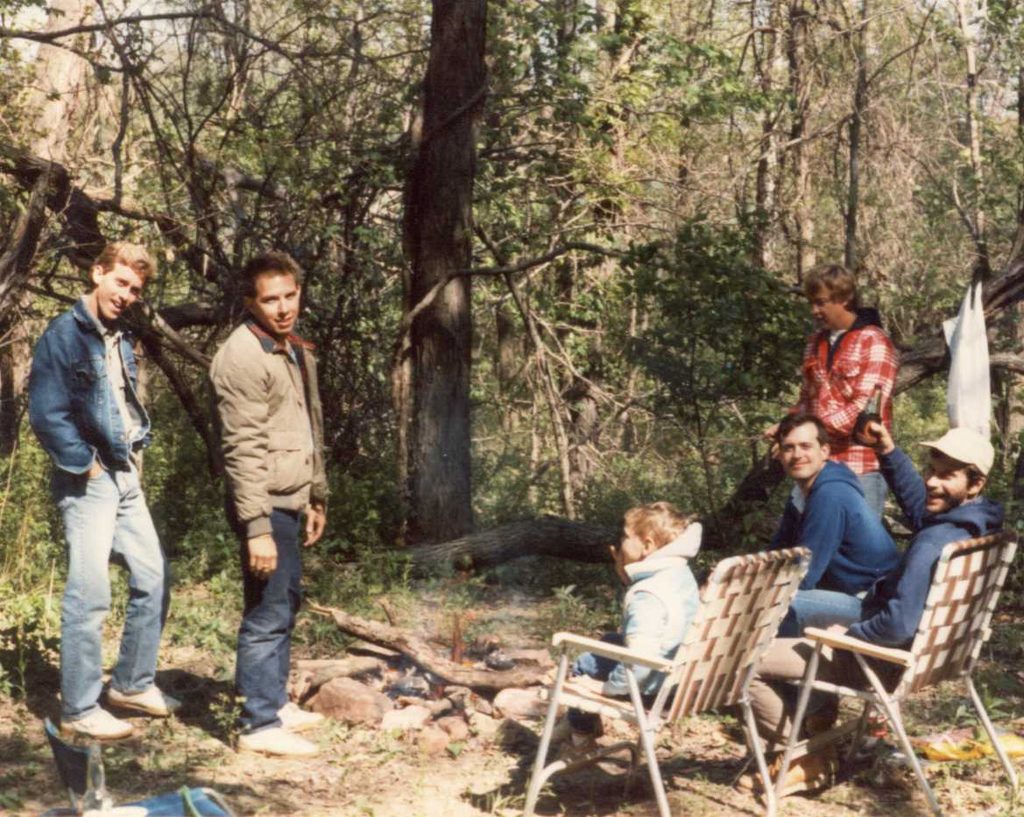
Some of us went camping together. Some went to the bars and baths. Some created or joined community groups—music choruses, athletic leagues, professional networks, financial groups. Eventually even gay rodeo was a thing. Some went home together. Some went home alone. MCC didn’t have to remain the center of our lives to have been the incubator that helped launch them.
MCC was also where I met Keith Spare. Keith deserves a lot of credit in my personal coming-out story and hundreds of others’, as well as in Kansas City’s gay history. I may have had some differences with him over the years, but without a doubt I must say this: Keith mattered. He founded Gay Talk, a telephone hotline that seems almost quaint now until you remember what the world looked like before the Internet and Google, let alone AI.
A frightened kid in Kansas could not type “gay Kansas City” into a phone and receive tens of thousands of results. One could try going to the library, as I did, and search for “homosexual,” hoping nobody noticed. I found remarkably little, and what was there was not particularly supportive. But in Kansas City you could open the telephone directory—the White Pages, children—and there was a single entry with the word “gay” in it, and you can thank Keith Spare for that.
Gay Talk. Where are the bars? Do you know a gay-friendly doctor? I think I’m homosexual. My parents found out. I don’t know what to do. Sometimes: I don’t want to live. Volunteers answered those calls to a hotline. The first of its kind. That was revolutionary.
Keith also taught me another, very personal lesson about coming out as a gay man in the 1970s: be brazen. Be bold. Flaunt it. One Sunday morning we were walking the couple of blocks from the basement room I rented in North Hyde Park to MCC. A young girl sitting on the steps of a house called out something at us as we passed. I think it was “fairies.” Keith stopped in mid-stride, stood very straight, turned slowly and dramatically toward her, raised his hand beside his face and went: “Poof.” Fairy dust.
Then he turned around and continued walking unfazed while I scrambled to follow after, my head still turned to watch the result. The girl had recoiled as though he had actually thrown something at her. I stood there thinking, What the fuck just happened? Keith had taken the insult out of her mouth and used it to defend himself—and me. It may have been the first time I saw somebody perform gay self-defense without defending anything: no apology, no explanation, no shame. Poof. I learned something. My Big Joy T-shirt may read “When in doubt… twirl,” but poofing isn’t a bad option either.
MCC was also where Keith walked up to me during social hour with a good-looking young blond man beside him. “Jon, I want you to meet somebody. This is Michael.” More than forty-five years later, Michael can probably still roll his eyes on cue because he knows what comes next. Yes, Michael’s line to the inevitable question of where did we meet is: “We met at church.” That’s the poetic version. Then Jon chimes in: “Our first date was at the VD clinic.” There is a longer explanation, but why ruin a perfectly good introduction to our lives together?
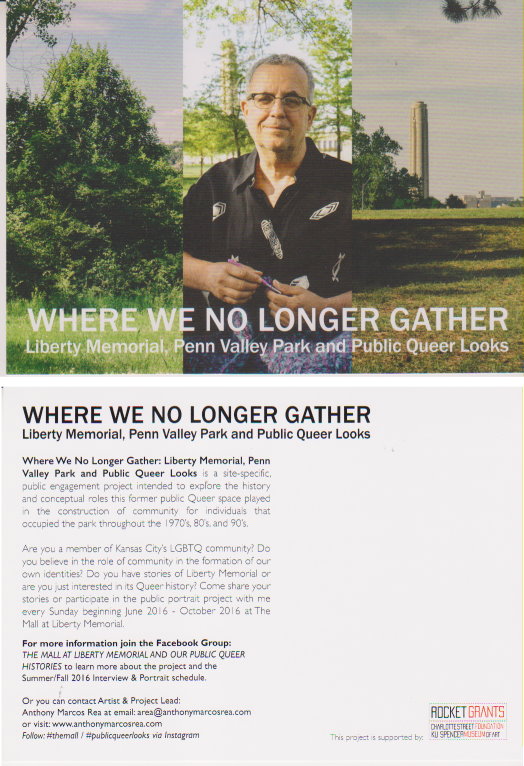
I was evolving from being a practicing homosexual to becoming what I called a professional homosexual; I just wasn’t getting paid for it yet. I was a voracious reader, and I read gay newspapers from Boston, New York, San Francisco and anywhere else I could find them. I bought books at the lesbian-owned bookstore.
I frequented Penn Valley Park and Blue Valley Park, cruising for casual, even anonymous sex. If Flock cameras existed then, I would surely have been busted for crimes against nature. I went to bars. I went to baths. I went to softball games. I made friends. I hosted parties. I joined an outdoor club.
I wrote for a gay bar rag called The Alternate News. Even then I was writing and telling stories and trying to connect with my new community. I found jobs, often temporary and short-term. I started a gay-owned remodeling business serving the gay community. I was no longer trying to stop being homosexual. I was getting pretty good at it.
I even co-founded a small private group of maybe a dozen or so members. We called ourselves Naturally Gay. Individuals or couples took turns hosting cocktail parties in our homes… sans clothes. Believe it or not, that one group offered me more sophisticated, cultural, intelligent, emotional and intellectual stimulation than any other I can recall today. I only remember one very explicitly sexual orgy, and like so many other experimental encounters with multiple partners, it was truly a bust, imho. Call me old-fashioned.
I discovered Harvey Milk, who was assassinated on November 27, 1978—coincidentally Michael’s birthday. I cannot give you a clean date for when Milk first entered my consciousness, but I remember the effect: Oh my gawd. Here was an openly gay man who had made being openly gay a political act. I believe in role models. I believe in martyrs. I didn’t want Harvey Milk’s life, and gawd knows I didn’t want its ending, but I wanted that fearlessness, that visibility, that insistence that gay people belonged not merely in bars, baths and church basements, but at City Hall and beyond. Congress and the White House eventually too.
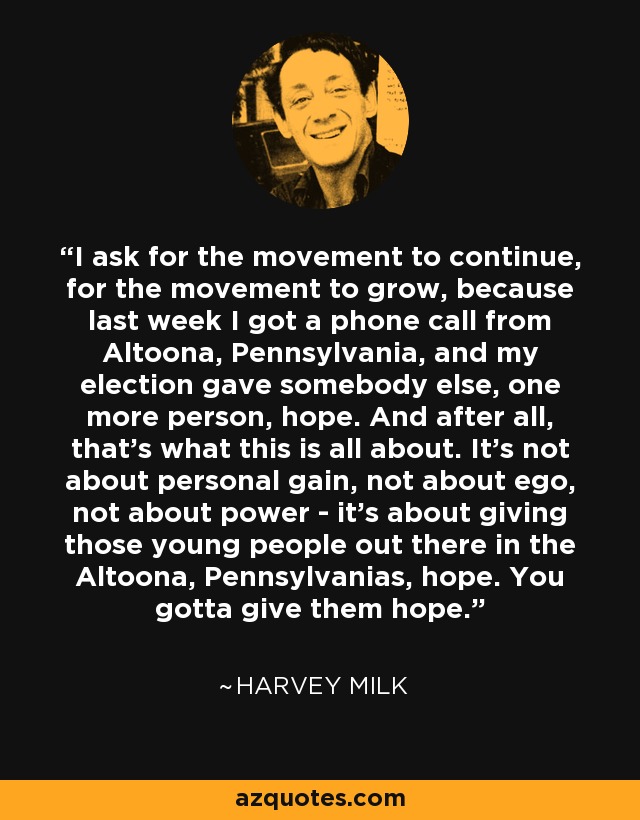
I believe we create our own reality.
I believe that we can make our world a better place for everyone.
Around the same period I was reading some decidedly less conventional material—the psychic Seth and other mystical writers, “create your own reality” kinds of ideas. I experimented with them. I still do, in my own way. The contrast of that message that we control our own destinies offered me the very antidote that I needed to the Christian doom philosophy of original sin, damnation to an eternity in hell if I didn’t accept a doctrine of mortal helplessness before an imaginary deity that was obviously created by other human beings, like myself.
How can I tell my story without at least acknowledging that I do have a spiritual component to my nature? I am in control of and responsible for my own life. You, dear reader, need to understand that is what I believe for myself. I think that it may be the only way that I can make telling this particular story at this time make sense. Follow that thread if you can.
A few years later I would become the first openly gay candidate for Kansas City Council. The funny thing is that I didn’t carefully plot that campaign as the fulfillment of a Harvey Milk fantasy. Someone came looking for me. Make of that what you will. I certainly have. To this day I believe that I created my own reality.
But something else happened that I did not knowingly create that propelled me into a very public role in my life: AIDS. I first heard about it sitting in my pickup at Blue Valley Park. I was cruising, of course. There is an art, if not a science, to cruising public parks, and a great deal of that art consists of doing absolutely nothing. You sit. You wait. You watch another car go by. You wonder whether he is looking at you. He wonders whether you’re looking at him. Oh look! He tapped his brake lights. Red means GO.
I had the radio on. A news reporter mentioned homosexuals. That word alone was enough to get my attention in 1981. Something strange was happening to gay men in Los Angeles. People had gotten sick. Some had died. Enough had died to catch the attention of the U.S. Center for Disease Control (CDC), which published an article in its Morbidity and Mortality Weekly Report (MMWR) reporting cases of a rare lung infection, Pneumocystis carinii pneumonia (PCP), in five young (reportedly) previously healthy gay men. If the briefing had allowed closer scrutiny for accuracy, it would be obvious that these men were far from previously healthy, but that is too big a diversion for this story.
Nobody seemed to know exactly what the cause was. I listened. The brief report ended and I went back to cruising. Why wouldn’t I? Nobody had yet told us that sex was involved. Nobody had told me that this strange little news item was announcing the destruction of the world I had just discovered. Others in my community were apparently paying more attention than I was that day.
Kansas City’s AIDS organizations began developing without me. I want to be very clear about that because history can too easily get distorted by whoever happened to get their name in the newspaper most often. People in medicine, public health and social services saw the wave sooner than I did. Gay men and lesbians organized care. They created services, housing, food programs, buddy systems and fundraising operations. They did the hard work, often alone or in very small groups: the definition of grassroots organizing. I was Jonny-come-lately.
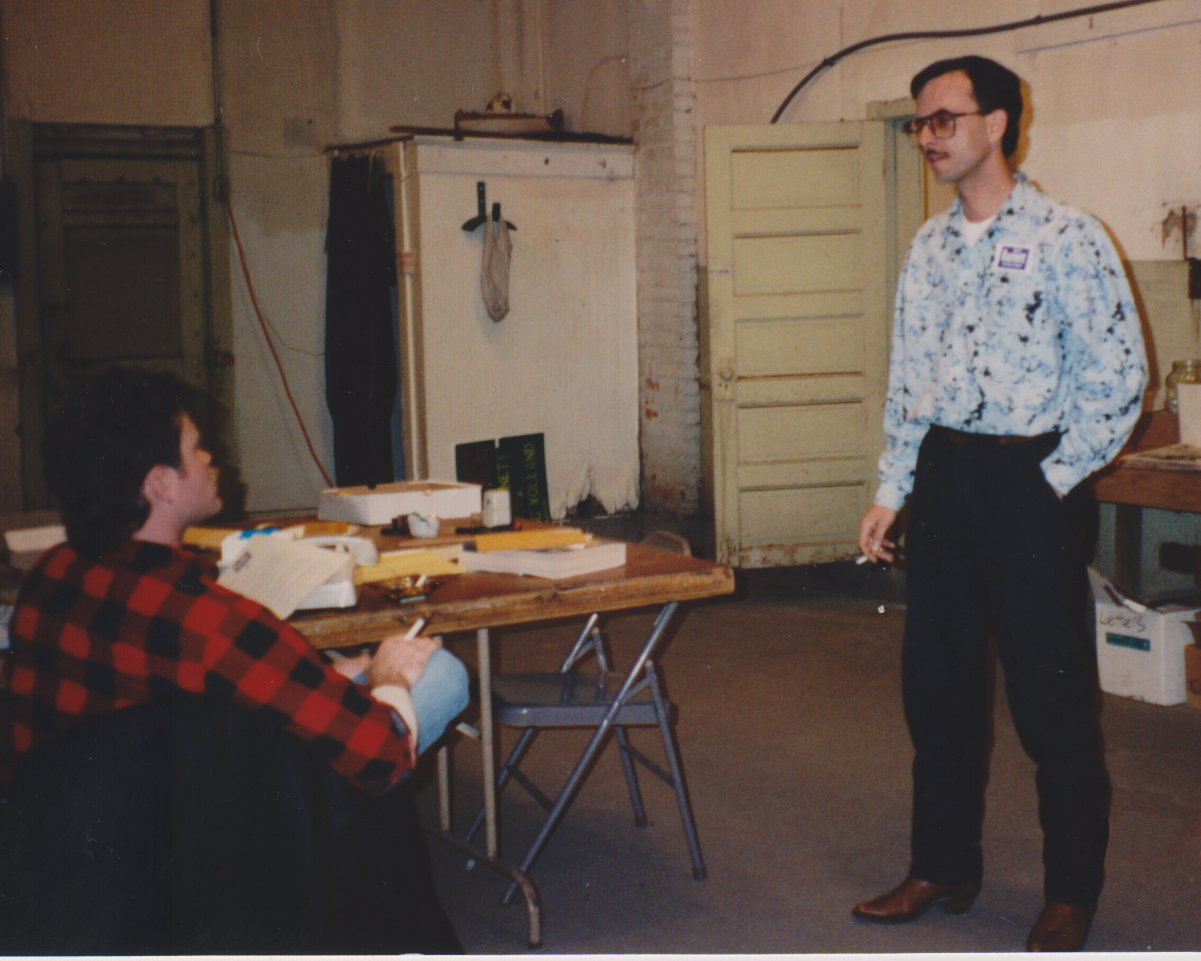
I eventually volunteered and trained with the Good Samaritan Project to be a “buddy.” I learned things about caring for people who were sick and dying. But that was not where I found my role. I was just starting to get my groove on as an openly gay man, and I was angry. That surprised me when I said it recently. I was scared too, yes. But I was angry. Later, that was the first thing Barbara Shelley wrote about me in a front-page Kansas City Times feature on AIDS in Kansas City on July 8, 1989. This thing—whatever it was—was attacking my newly found Shangri-La, or maybe I should say Fire Island. I had spent my youth trying to escape homosexuality. Then I found gay life, gay friendship, gay sex, gay community, gay politics, gay possibility. And now some fucking virus was taking it away. I began reading about ACT UP and the increasingly confrontational AIDS activism in larger cities. Kansas City wasn’t doing that yet. The epidemic was barely on the city’s radar. Funding was all but nonexistent and desperately needed. We had no friends in Washington powerful enough to get the executive’s attention in the White House.
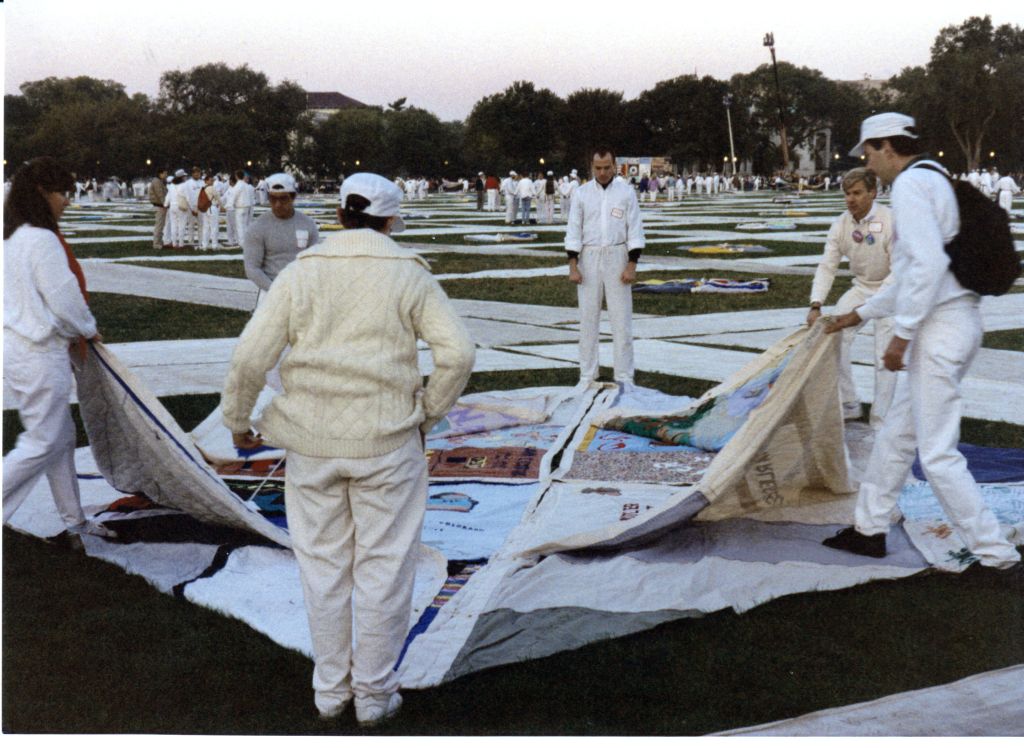
So I built my first protest sign and sallied forth from my front porch. I wanted to organize, but how could I ask people to do something I had never done myself? The sandwich board was made out of half-inch plywood. I strongly advise against this. I was a remodeling contractor; maybe I thought a protest sign needed to survive a car ramming from an angry passerby. But I carried the damned thing—alone—to protest the plight of a young gay man named Mark Sweetland, who had lost his employer-based health insurance after his illness was blamed on his “lifestyle.”
I picketed. I made noise. I placed notices in the gay bar rag calling people together, and a dozen mostly gay men showed up. Then more. I did not know how to organize. I had never been trained. I just did it anyway. That became something of a habit. Again, I may have organized the meeting, but others quickly took over and did so much of the hard work. I’m not trying to diminish my significance as a community organizer so much as acknowledge that my remodeling toolbox sometimes seemed better equipped than my social-change toolbox, and that others deserve more credit for the results.
ACT UP/KC. The Human Rights Ordinance Project. The Missouri Task Force for Lesbian and Gay Concerns. Other organizations and campaigns. I learned that I could bring people into a room, persuade, cajole and talk to reporters. Gawd, could I talk to reporters. I became the reliable homosexual quotation machine. An issue involving gays or AIDS came up? Call Jon Barnett. He’s available. He works for a gay newspaper. He loves to talk. He’ll give you a quote. And I usually did. I also usually passed on other sources, but in hindsight, maybe I could have done more to push reporters to do their work by not giving up my own words so easily. Shut up, Jon.
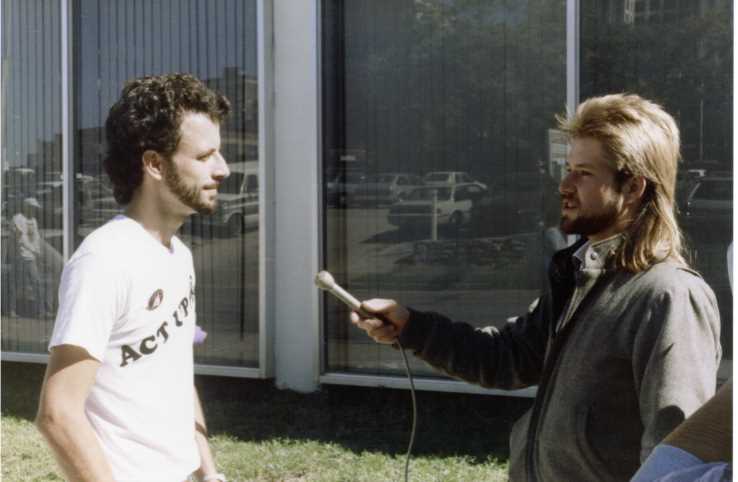
Of all the organizing I was involved in, helping win passage of Kansas City’s Human Rights Ordinance may be the accomplishment I value most. Hundreds of people made that happen, and the story deserves more than the paragraph I could give it here.
Circumstances and placement have power too. When people search Kansas City’s queer history today, my name appears disproportionately often because I was visible, accessible and quotable. I’d like to think that I did important things. I was not always the most important organizer. For every Jon Barnett there were a hundred other people doing the hard work. Some never got quoted, photographed or put on a ballot. Some were Black ministers who could not come out publicly. Some were lesbians caring for dying men when plenty of others wanted nothing to do with them. Some were recovering addicts who kept other people alive. History loves microphones. I happened to be standing near one.
And that created another problem. I became, fairly or unfairly, one of the faces of Kansas City’s gay community. I ran for office. My name appeared on yard signs. You couldn’t enter a gay bar without seeing a table tent with my face and name on it. People who had never met another openly gay person met me in the newspaper. On television. On the radio. That created in me a very powerful sense of awesome responsibility to the community I wanted to try to represent. I did not want to be the homosexual man who proved everybody’s ugliest stereotypes.
Just because I was sexually promiscuous.
There. We’ve finally arrived.
I have always been more sexually promiscuous than most people who knew the public Jon Barnett probably realized. Michael and I have been together for more than forty-five years. We have been extremely faithful to our personal vows to one another as life partners. As a couple. As a same-sex couple. We have not always been monogamous and our agreement has never suggested we thought that we should be. Fidelity and monogamy are not synonyms. Fidelity is keeping the promises you actually made. Our relationship was ours. We did it our way. When it didn’t work perfectly, we renegotiated and found ways to make it work. For us. I consider it one of my greatest life achievements, with far more than half the credit going to Michael for putting up with me.
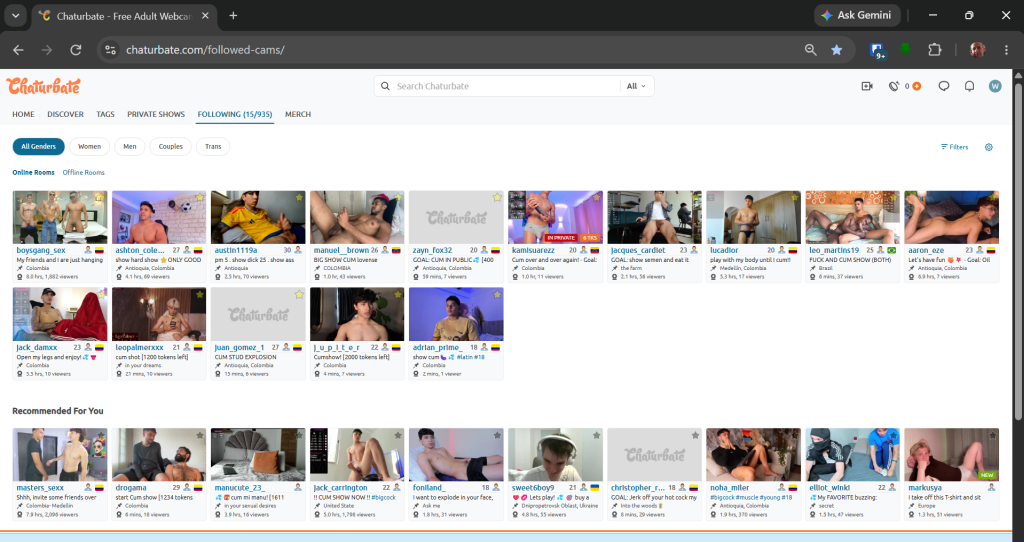
I even have my own modeling account there, which helped me stand out
as someone other than the typical anonymous user.
Rather than flaunting my incredibly sexy body, my profile boasted:
“putting the chat back into chaturbate.”
No, I’m not going to disclose my username here.
But I understood the politics of respectability. If Jon Barnett got caught doing something embarrassing publicly, plenty of people weren’t going to say, “Jon Barnett did something embarrassing.” They were going to say, “See? That’s what homosexuals are like.” So I compartmentalized. Yes, partly because I was ashamed. Yes, maybe partly because I was afraid. I remembered Harvey Milk. But also, I hope in hindsight, because I felt some responsibility for the image I projected while asking straight Kansas City to give gay people equality, dignity and respect. Correction: not give. To recognize those things we already have, but still needed to claim for ourselves.
Sex didn’t travel in a straight line through those years. After my HIV diagnosis, there was a long stretch—five years, maybe ten or more—when I was essentially celibate. Even after I knew my viral load was undetectable, saying “I’m HIV-positive” could end an encounter before it began. Eventually massage gave me a way back. Touch. Closeness. Affection. Sometimes a massage stayed a massage.
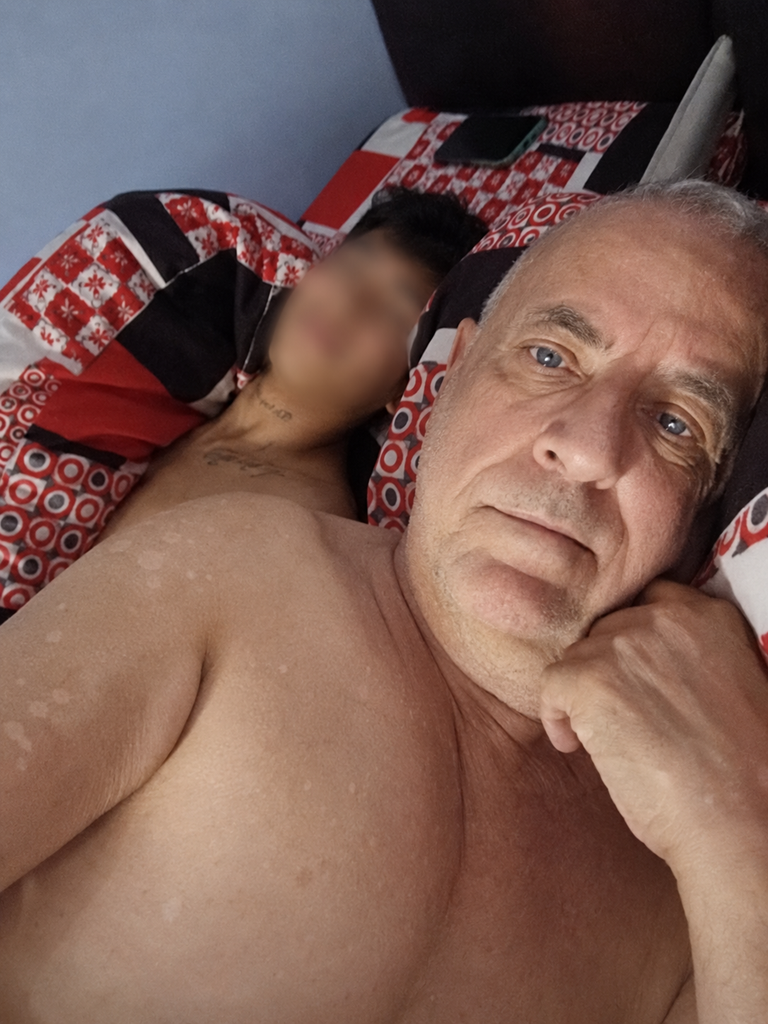
Without his help, I might not have gotten my first visa.
Many nights it was enough just to sleep in the same bed with him.
His Colombian magic, for me, was his calming spirit.
For him? He says it was the back massages.
Ufff!
Sometimes intimacy acquired an erotic charge and went somewhere else. By then an intimate partner and I had gotten to know each other a little, and I had rediscovered something I had nearly forgotten: how good it felt simply to be close to another man’s body. To hear his heart beat. To touch his skin with all my senses. To feel his responses to my touch. No, I hadn’t yet lost my touch. I was good at what I did, and with this disclosure, I’m no longer ashamed to admit it.
Now I am seventy years old and living in Colombia. Discretion be damned. Some of you have suspected, or at least wondered. It is time to come out again. I have had more physical/sensual/intimate encounters with young adult men since I began coming to Colombia than I have had in the previous twenty years. There. That wasn’t so difficult to admit. Yes, it was. And I also didn’t even say sexual.
I call them “the boys.” I know what some detractor will try to do with that word, so let’s get it out of the way. I mean adult men—chicos—often men young enough to be my sons, sometimes maybe even my grandsons, but always adult men. Many of them I also affectionately all hijo, while they call me papi.
Colombianos call grown men chico all the time. Some of my Colombian friends call me chico, which requires an admirable disregard for evidence. The men I first met through Chaturbate had already passed that platform’s rigid and unforgiving 18+ age-verification process before I ever encountered them. Most of them are well into their 20s or thirties. For comparison with how different cultural mores can be here, Colombia’s much more tolerant age of consent: 14! Even I struggle with that one.
I am attracted to adult male sexuality. I have zero sexual attraction to prepubescent boys. If someone wants to pretend otherwise because “the boys” makes a more useful accusation than “young adult men,” I cannot stop them. But I am not going to let them become my copy editors.
More intriguing for me than the age differential is that the vast majority of intimacy has been with men who identify as heterosexual. A few more embrace the label of bi. And believe it or not, only two were openly gay. I’m not going to take time for a deep dive into what all that means or represents, except to say that I no longer have much use for the old labels. They are incomplete at best and inaccurate at worst. I will also propose that my own gender may give me a unique and quite personal take on what’s really going on with gay male promiscuity in such a broad swath of my community. Hint: we’re men! We’re wired differently than women. Nothing is absolute, but there are definitely some tendencies to sexual promiscuity and I think the scientific literature will support me on that.
Why are some of these young men interested in me? I don’t entirely know. Maybe being an older gay gringo creates distance from their ordinary lives. Maybe experimenting with me feels safer than experimenting with the guy they went to school with. Maybe there is curiosity, novelty, affection or status. Maybe money sometimes. Let’s not bullshit each other. Money can matter. Generosity can matter. Age can create power. Nationality can create power. Experience can create power. Those things deserve examination. They do not automatically explain everything.
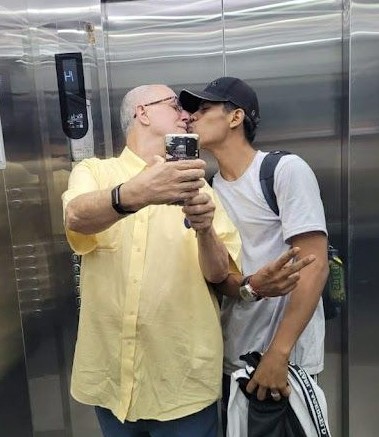
And I can meet someone who would never win a beauty contest and find him deeply attractive because of the way he thinks, laughs, touches or listens, or simply because of the way the room feels when he enters it. Junior does that to me. His presence calms me in a way few older people do. That is attraction too. The alternative, at my age, is sitting with my peers comparing our recent medical records. No thank you. I’m old. I’m not dead. Yet.
Here is another possibility that took me an embarrassingly long time to allow: maybe some of them are attracted to me. Imagine that. I don’t mean they look at my seventy-year-old body and mistake me for a twenty-five-year-old underwear model. Attraction doesn’t work that way for me. Why should I assume it works that way for them? I can find a Chaturbate model physically magnificent and lose interest within five minutes because he is arrogant, cruel, stupid or boring.
Some of the boys I care about deeply have never had sex with me. Some have. Some relationships sit in territory for which our vocabulary is remarkably inadequate. Sex is one piece. Money is one piece. Friendship is one piece. Generosity is one piece. Desire is one piece. Power is one piece. Affection is one piece. Love is sometimes a piece. And more than one of those pieces works in two directions.
I have a knack, I think, for making people feel good about themselves. My mother did too. She used to tell me I was her favorite child, right in front of the other siblings. It became a family joke. At least I found it humorous. The uncomfortable part of the joke is that everybody knew there might be a little truth in it. I was born after her miscarriage. Of course I was special.
Now I tell others that Javi is my favorite Colombian boy. Not that it should matter, nor that you will choose to believe me, but our friendship is 100% platonic. He knows I have several favorites. I know that he knows. He still likes hearing it. Words are funny that way. “You are my favorite” does not always mean I have conducted a statistical analysis and you have achieved the highest score. Sometimes it means: right now, I want you to know that you are special to me. Maybe that is another thing my mother taught me. Maybe she just knew that deep down inside, I still harbored an inferiority complex or something.
So why disclose any of this? Why not leave the respectable version of Jon Barnett intact? I have already constructed the defense. Some porter or tenant or busybody looks at the traffic through my apartment and asks what kind of lecherous old man has all these young men visiting him. I recoil in horror. Sex? What do you think is happening here? I barely get erections anymore! You’re the one with the dirty mind.
It is actually a pretty good defense. It is also bullshit. Sex does not disappear because an erection does. Sex does not disappear because ejaculation does. I know perfectly well what I’m doing when I use somebody else’s narrow definition of sexuality to evade the larger truth.
At seventy, the phrase that best describes much of what I want is physical intimacy: touch, closeness, affection, desire, pleasure. And eroticism. I love that little current that can pass between two people before they even touch, when the space between two bodies suddenly isn’t empty anymore. Sex is so much more than fucking. My body has had plenty of time to teach me that.
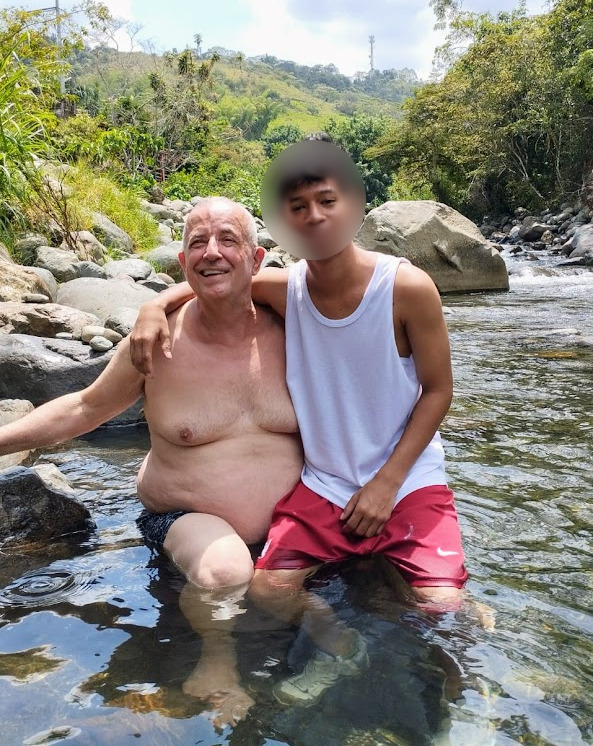
if I told you that the image I will always carry of his eyes rolling so far into
his head that the pupils disappeared was never captured on camera.
So here’s the larger truth. I like sex. I have always liked sex. I have been promiscuous. I do not consider promiscuity inherently immoral. That does not mean every sexual choice is automatically ethical because everybody was naked and having fun. Consent matters. Honesty matters. Promises matter. Power matters. Whether somebody can comfortably say no matters. Money complicates things. Age complicates things. Life is complicated.
There. Happy? Probably not. Neither am I, because I still care what people think. I would love to announce that I have reached seventy and no longer give a fuck. I have certainly reduced my inventory of available fucks, but I have not exhausted it.
I care what Michael thinks. I care what my family thinks. I care what my friends think. I care what people who worked beside me for gay equality think. I care about my reputation. I care about the possibility that somebody could take one piece of this story and use it to dismiss everything else I did.
That is exactly what frightened the younger Jon. After spending a lifetime asking society to treat gay people with dignity, what if society looks at the private me and says: We knew it. Promiscuous homosexual. Dirty old man. Lecherous gringo. Hypocrite. Pervert. Some of those words are more interesting than others. I rather like pervert. Maybe I’ll keep that one.
But here is what I reject: no one gets to take one true thing about me and make it the definition of me. That was true when the word was homosexual. It is true now when the word is promiscuous. I am not confessing that the enemies of homosexuality were right all along. I am talking about something larger than gay liberation. I am talking about sexual liberation. A movement like that is not poured from one respectable slab. It is built from many blocks: love, marriage, bodily autonomy, intimacy, eroticism, non-monogamy, promiscuity. We can argue forever about which block carries the most weight. I am more interested in refusing to erase the ones polite society finds embarrassing. Some blocks get polished and displayed. Some get buried below grade. Promiscuity is one of those buried blocks. We fought for the right to love. We also fought for the right to desire, touch, explore, play and, yes, suck and fuck—to define our own intimate lives.
That doesn’t mean sexual liberation belongs only to promiscuous gay men. Thank gawd it grew far beyond us. But we were there: the bathhouse queens, the bar queens, the bush queens, the bookstore queens, the men who loved one man, the men who loved many, the women who carried half the movement while the newspapers kept interviewing men like me. All of us.
Like so many incredibly perfect things, the connection ultimately proved
to be too good to last but the memories are well documented.
I once told a national gay-rights audience that liberation was not ultimately going to be won in San Francisco or New York. It would be won in Kansas City, Omaha, Wichita, Tulsa, Colby, Kansas—places where ordinary people had to discover that the homosexual next door was still the person next door. I spent much of my life trying to help make that happen.
And somewhere along the way, I became respectable enough that I started protecting the respectable version of myself. Maybe that’s the final closet. Not homosexuality. Not even promiscuity. Respectability. The idea that dignity belongs more easily to people whose sexuality stays within approved limits, and that old men should quietly become sexually invisible. I don’t want to disappear that way.
My mother gave me the answer a long time ago: “I don’t understand it, but I accept you.” I don’t require anyone to understand everything about my sexuality. Hell, I don’t understand everything about my sexuality. I have theories. I have rationalizations. I have appetites. I have contradictions. I have some very good stories. I have some stories that should probably remain untold. Maybe.
But I am increasingly unwilling to accept the proposition that dignity requires editing myself into somebody else’s idea of an acceptable homosexual. Would the young Jon Barnett be frightened by the old man I’ve become? Absolutely. He would worry about the publicity, Michael, the movement, what respectable people might say. He would probably beg me to shut the fuck up.
But I think there is something else he would feel: jealousy. The wallflower from Colby, Kansas—the frightened boy who once begged Jesus to make him straight—would look at this battered old man in Colombia, surrounded by affection, still capable of desire, still capable of giving and receiving pleasure, still discovering people who surprise him, and realize that somehow the story did not end where he thought it would.
And I think he might say: You lucky old queer.