Pain, the Brain, Aging, and Migración Colombia
It’s 2 a.m., and I have to pee.
That’s just about the simplest, least glamorous human problem imaginable for a 69-year-old man…except that my body has recently added a new rule: you don’t get to do simple things anymore without negotiating for them first.
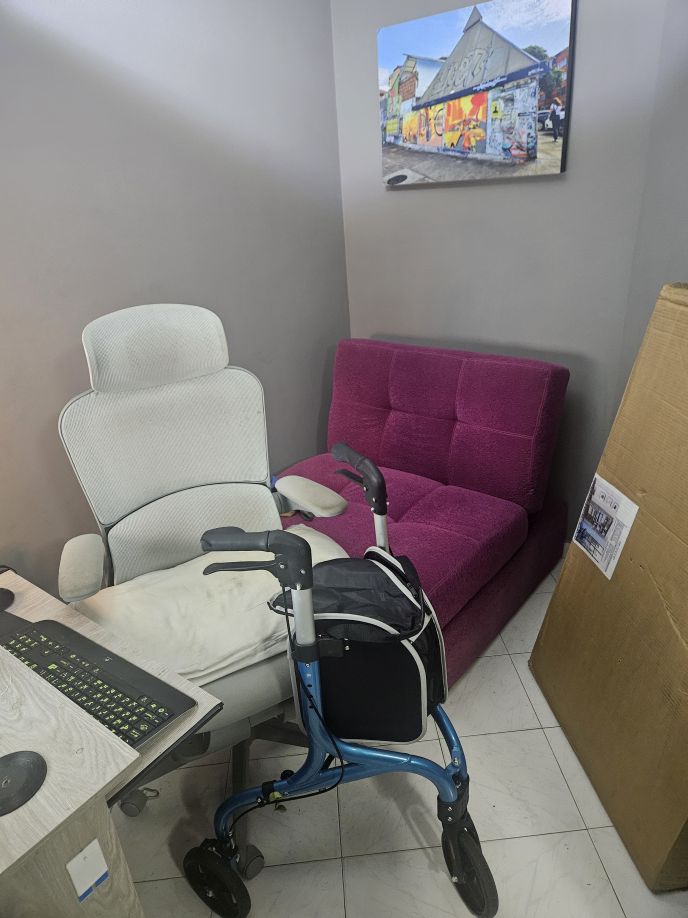
I reach for assistance to levitate my body and get out of bed—a new addition to my life: the rollator walker—but my hand closes on air.
I had left it in the dining room last night because I didn’t need it so much then. I wasn’t hurting so much after a day of downing pain pills, including narcotics, that I couldn’t walk down the hallway to my bedroom. I use that word “walk” charitably. My gait is no longer really walking. At least not as I used to know it.
For several minutes I don’t move. I don’t even try. I just lie there in bed, calculating. Testing. Bracing. Rehearsing that first motion—the pivot, the reach, the weight shift—and my brain flashes a preview of what’s waiting for me on the other side of that decision.
Pain.
Disabling pain.
The kind of pain that doesn’t just hurt—it commands. It overrides all other traffic on that superhighway that is my nervous system. The kind of pain that makes one consider getting down on all fours and crawling, because you’re desperate.
I lie there longer than a person should have to lie in bed just to get up and go to the bathroom. And I think: how much worse is this going to get? How long before the day my body’s latest revolt against me will not allow me to get up at all? What will I do when I simply decide to soil the mattress with my urine?
This is what it means when the body, and the brain—which is not really a separate entity—becomes another border. It’s not philosophical, nor poetic, it’s literal.
I moved to Colombia with Mikey more than six months ago with optimistic intentions to write—a lot. Not just write, but also to listen and to talk and to document conversations. I wanted to share stories. Other people’s stories. I’m tired of just telling my story.
I had invested in equipment and apps: video editing, translation tools, social media plans, the whole shiny new “second act” package. I came here imagining spacious days: long walks in beautiful and exotic new places, good coffee. I hoped to find the kind of mental solace where stories line up and paciently wait their turn to be told. I had convinced myself that I would live the last chapter of my life in a magical world, like something out of the movie Encanto.
All that gear is still sitting here. Ready, but idle.
Not because I’m lazy. Not because I’m out of ideas.
But because there is now almost always something demanding my attention more urgently than writing. Instead of the stories, I now find myself lining up and waiting for appointments and test results. Instead of getting lost browsing Airbnb listings and bus schedules, I am stuck in clinics, and hospitals—something that I had sworn I was going to avoid after I moved. Once again I must be patient… the noun, not the adjective.
Pain. Logistics. Appointments. Paperwork. Waiting. Recovering. Repeating.
It’s getting more rare every month and every week to have a day that feels like the life I expected to be living here.
Before I left the States, I told myself that I wouldn’t miss Medicare and supplemental insurance too much. I had already decided that I wasn’t going to chase expensive medical interventions to extend life. I have, I think, convinced myself that I have already lived a good life. No, a GREAT life. I was not supposed to live this long. I can’t say that I have no regrets, but I have none that make me wish I had lived life differently.
So, no expensive chemo for me. No new and invasive surgeries. No heroic measures designed to buy time at any cost. No long-term nursing home, living a lonely and meaningless life in diapers and a wheelchair. I would manage future medical care directly and use the savings from the expensive insurance premiums to pay cash for whatever minor issues made sense to treat medically, when it made sense.
That was and is my plan for the minor stuff. As for the dramatic and expensive possiblities, like cancer, heart attack, stroke: simply accept the cards life deals me and let go.
I did not plan for pain, at least not this kind of chronic, unrelenting, incapacitating pain.
Not pain as a condition unto itself. Not the kind of pain that erases the normal texture of a day and replaces it with new priorities: how do I move without falling? how do I get through this hour? how do I make it to the bathroom? Not the kind of pain that overloads and overrides a nervous system that is also under attack at it’s most critical hub: the brain.
Even though acute pain may be the single most common medical condition I’ve lived with in a long life of multiple medical conditions—kidney stones, blood clots, surgeries—I still wasn’t prepared for this kind of chronic pain. Call me naive.
My body throws me yet another curveball, and it’s almost insulting in how innocent the primary medical diagnosis sounds.
Arthritis.
Mierda
And then there’s a second opinion: sciatica—nerve pain originating in the spine. I have some prior knowledge of it. But nothing in my personal history prepared me for how completely chronic pain can hijack the nervous system. How it can make that most basic quality-of-life task, walking, feel like a high-risk activity.
Adding insult to injury, there is another well-known complication: referred pain. The source of the pain itself is still in dispute.
One doctor says it’s arthritis. Another says sciatica. I’m guessing both, but it seems that doctors are mostly trained to think of diagnoses as a single cause. I’m stuck in the limbo that is my own corporeal body, that is also interacting with a vulnerable brain, trying to interpret signals that may not even be coming from where they claim to be coming from.
That’s the cruel trick of referred pain: it doesn’t live where it hurts.
My brain insists the problem must be in my hip because that’s obviously where the pain feels most vivid and undeniable. I can practically point to the irritation and say: there. That’s the culprit. And the MRI suggests that I am not imagining it.
“…incipient degenerative arthritic changes in the right hip.” Not yet severe, but present and obvious.
But the physical exam by the Physiatrist who would actually perform a guided steroid injection, complicates that certainty. The source of the pain is not so obvious. The doctor’s probing fingers trigger pain into the back of my calf—classic nerve territory—almost as reliably as the pain I’ve been referring to as “hip pain.” Pressing on my spine itself doesn’t deliver the dramatic stabbing pain my mind expects. He picks up my right leg and moves it freely like a wooden marionette and I can only acknowledge honestly: no, that doesn’t really hurt, and he knowingly, but kindly, nods at my confession. So now I’m suspended between hypotheses: arthritis, sciatica, both, neither.
And this is where another border in my life enters the picture—that invisible geographic border that comes with passport stamps, visas and deadlines. The mystical line that defines whether or not I am “legal” or “undocumented”.
We have a border run coming up. Not because we’re impulsive. Not because we changed our minds about living here. Because bureaucracy is running on a calendar, and the calendar doesn’t care what’s happening in my pelvis, my spine, or my nervous system. I have to leave Colombia before February 15, so that I can return legally as a tourist again. A tourist with six months left on his apartment lease here. A tourist that owns a home full of furniture, including a refrigerator and three ceiling fans.
The border run is a mobility test. A test that I can’t afford to fail.
Airports. Lines. Standing. Sitting in the wrong chairs. Walking on hard surfaces. Navigating sidewalks not designed for fragile bodies or walkers with too-small wheels. Crossing from one country into another with the hope that a stamp resets the legal math—while my body runs its own algorithm in the background: pain, risk, fatigue, balance, coherence.
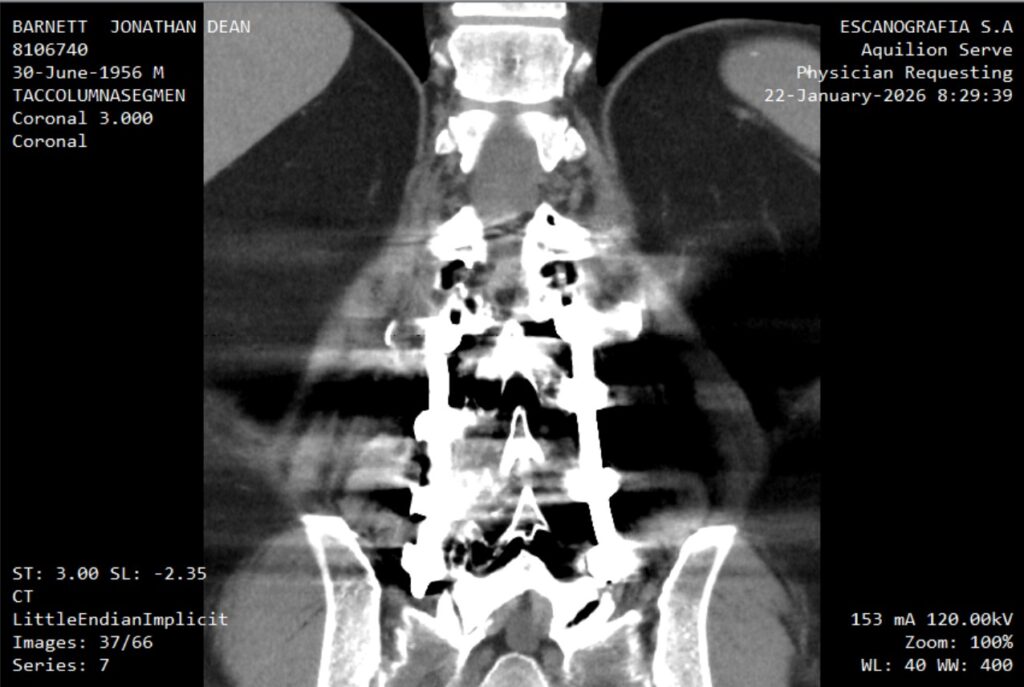
After my left hip replacement in August 2017 (another long and confusticating story), walking wasn’t just exercise. It was reclaimed territory. Independence. Sanity. Proof that I still belonged to my own body. Then came the spinal fusion in June 2023. Another negotiation. Another “you can have function, but you’re going to pay attention now.” Then the coclear implant in my skull, just weeks before leaving the USA for good.
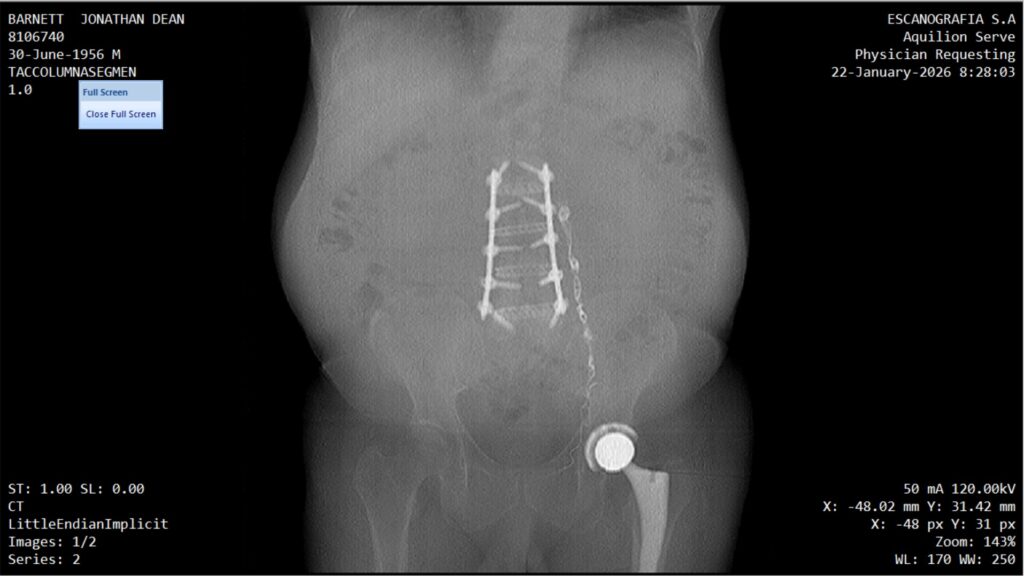
That squiggly thing is an embolisation coil in the main artery to my testicles, but that’s another story for another time.
Soy bionico.
Now I’m negotiating again, except this time uncertainty is part of the torture. If I knew exactly what we were treating—hip joint, spine, nerve root—I could accept the plan. I could endure the wait. I could tell myself we’re aiming at the right target. It allows me to avoid confronting my earlier commitment to refuse “extreme” medical intervention. Yes, it’s not just an IM injection, but it doesn’t require general anaesthesia and recovery in a hospital either.
At this moment I’m waiting on a CT report. After waiting for an MRI. After waiting for an x-ray. Because medical care here is not unlike the medical care I left behind. We have to rule out the least invasive, costly, problematic solutions before we can consider the most extreme, which in this case isn’t really so extreme. Now we’re waiting on clarity. Waiting for someone to point to the map that is also my body and say: here.
Es complicado
In the meantime, Mikey and I are having to learn some new dance moves.
When we walk to the market, he sometimes hovers so close to me that he unknowingly becomes another obstacle. He knows that he has to walk on my left side—when the sidewalk is wide enough and pedestrian traffic permits that—if he wants me to hear him. He doesn’t know yet whether to walk ahead of me or behind me, and I don’t know either. We perform this awkward choreography that somehow makes the simple act of walking so complicated.
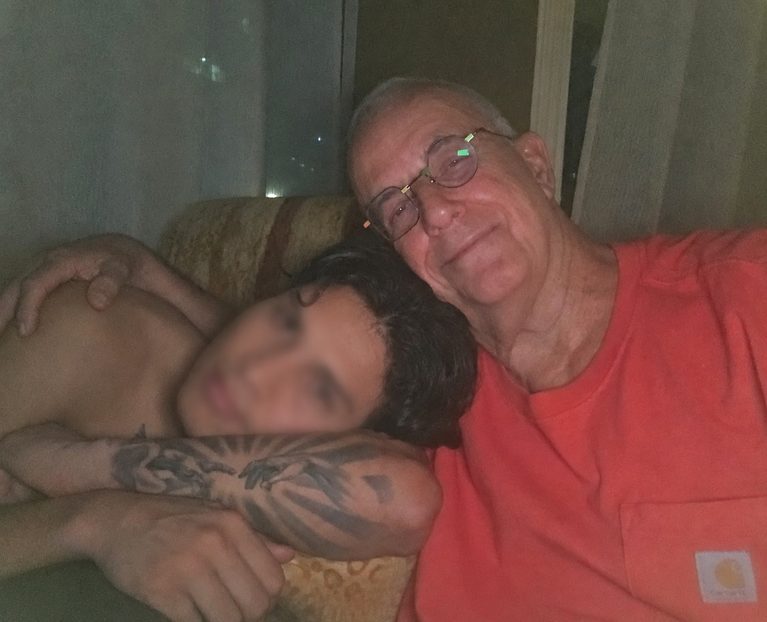
I’m not blaming him. I’m describing the way love changes shape when bodies change the rules. Some couples hold hands. We negotiate spacing. We negotiate speed. We negotiate pride. We negotiate fear. We’re quite the sight here as two old gay bumbling gringos trying to get some groceries or go out to eat, talking too loudly in public in English, which is one of the hallmarks of “ugly Americans.
Pain is like the Colombian pedestrians, in some ways. It doesn’t stay in one lane. It doesn’t always pass on the right or the left. It blocks one’s path without intent… or even awareness of causing inconvenience. It’s not neat and tidy. Unlike Colombians, it doesn’t accommodate you. It doesn’t somehow allow you to pass neatly and without contact at the last moment.
Pain has been a recurring character in my life: kidney stones, deep vein thrombosis, surgeries that left scars and titanium behind.
There’s more to this story, of course, and I haven’t yet titled it. There’s no way to talk about pain without talking about the brain. No brain, no pain. It’s not just the body, it’s an integrated living system with so many connections that they can’t all be counted. It’s too easy to get distracted with joints and bones and muscles and tendons and all the rest and forget about the real player in the saga of pain.
Yes, there’s another player in this game that needs to be named.
The brain.
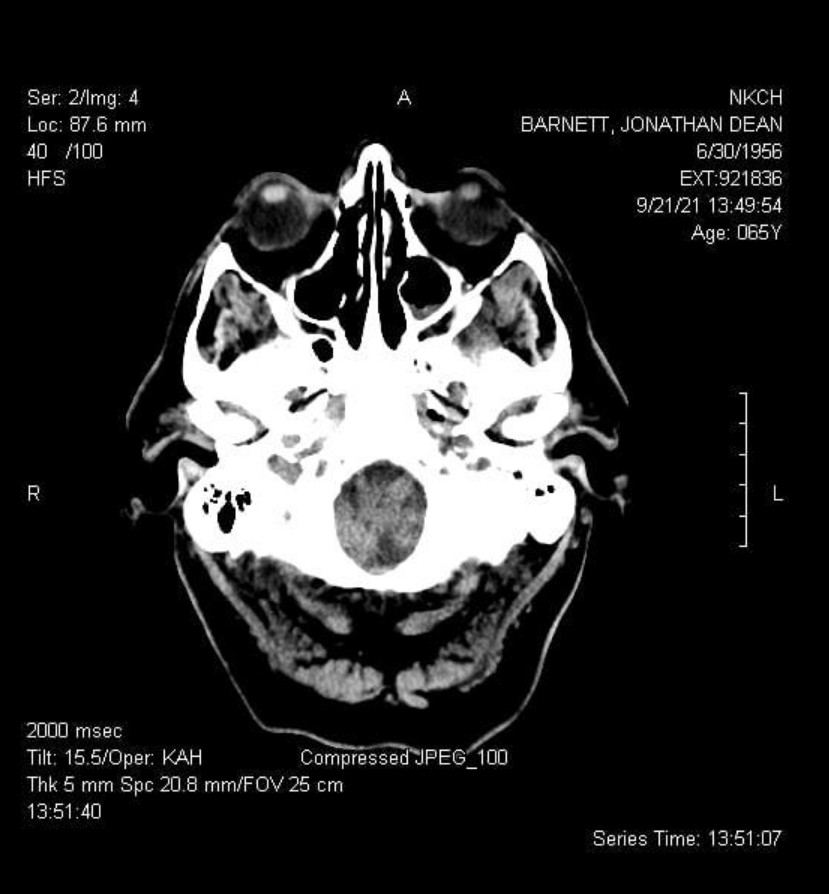
Chronic pain like this interferes with concentration, planning, and response time. It acts catalytically with the white matter disease (cerebral small vessel disease) that I’ve known about for several years now, amplifying cognitive fog and fatigue. I’ve watched dear friends and close family members live with crippling chronic pain, and I recognize the pattern: pain doesn’t just hurt. It disrupts your life.
And while all of this is happening, the casual retired life of writing that I imagined keeps getting postponed until later.
Later means after the appointment. After the phone call. After the paperwork. After the report is received. After the pain calms down.
Today I slept in later than I ever sleep in Colombia—9 a.m! It took more time than usual to overcome the worst level of pain. The disabling pain that sets in from the inertia of lying in bed for several hours. Eventually the narcotic Duxo (oxycodone) kicks in and things improve enough that I can make it to the audiologist just a few blocks away from our apartment, but only if I use the rollator (walker). My damaged hearing aid gets repaired, my spare gets reprogrammed, and the inprovement in my hearing is immediate. A small win that makes the world feel less muffled, if not more sane.
Then I message the physiatrist again about the missing CT report. Suddenly it’s after 5 p.m. and I’m ready for a nap. Then dinner. Then bedtime. Again.
This isn’t an unusual day for me anymore.
Mira, mi sol
Despite all this, life isn’t only pain and paperwork. And I have another mission to accomplish before the 15th of February. My border run to keep my passport and legal status in Colombia alive for a few more months while I apply for a new migrant visa.
I finally hear from Steven, a dear virtual friend whom I’ve conspired with for years to meet in person. For some reason I can’t explain now, traveling to Pasto has always felt more daunting to me than many Colombian cities that are more popular for international visitors. Maybe it’s just that the location is more isolated and in an area of the country that is considered more dangerous for those who depart from the major cities and roads.
Steven also recently became the father of twin daughters and has a new job and new responsibilities. Still, his response to my inquiry is warm and practical. Perhaps he has his own ulterior motives.
“…first of all, of course I would like to help you on this journey and disconnect from my Colombian life.”
He offers to pick me up at the aiport. He talks about the rough road one has to take to visit Las Lajas. He promises me to be transparent about costs. He says he’ll help me cross the border into Ecuador, which for him, as a Colombian, is a very simple and common day trip from Pasto.
It’s extraordinary in the most grounded way: someone offering to show up and help me.
This border run isn’t just logistics. It’s not just passport stamps. It’s also a human story unfolding inside the chaos that has entered my life uninvited and unwelcome. After all, I said that I wanted to tell stories, and I’m about to embark on yet another one.
Along the way—in Bogota, to be precise—Mikey will fly to the USA to spend a few weeks visiting family and old friends, while also satisfying his own visa requirements. Our choreography gets wider. Our dance together moves from salsa to waltz. Our timelines diverge briefly. This is what partnership looks like under pressure.
Some of you may wonder whether this makes me wish I hadn’t moved here.
It doesn’t.
There’s a small bonus in all this: I get to add Ecuador to my personal map, even if briefly—another pin, like those two nights in Canada or a few weeks in Mexico. Or that summer in Brazil.
I don’t have a clean ending yet, and that’s not really surprising. I don’t have a neat diagnosis. I don’t yet know where the injection should go—hip or spine—or even if it’s still on the table. I will hopefully find out at my next appointment this afternoon.
What I do have is a body and brain issuing conflicting signals and a calendar issuing non-negotiable deadlines.
Two borders at once.
So for now, I push again for the CT report. Not because I want drama. Because I want information. Because I’m trying to make good decisions with incomplete data—and because walking, my walking, has become the weak link that everything else depends on.
I have already mentioned that one of the reasons I came here to Colombia was honorable intentions to tell other people’s stories. This country is full of them. But right now, my own body (and my own brain) keeps interrupting. The truth is, I don’t know how to write about others in this moment without acknowledging the liabilities that keep reshaping my days.
I don’t regret moving here. What I regret is the fantasy that reinvention happens on a clean slate. Bodies carry history. So do relationships. So do nervous systems.
This is not a story about giving up. It’s a story about adaptation under pressure, about loving someone while learning new choreography, about continuing to widen ones world even when your walking radius shrinks.
Mañana