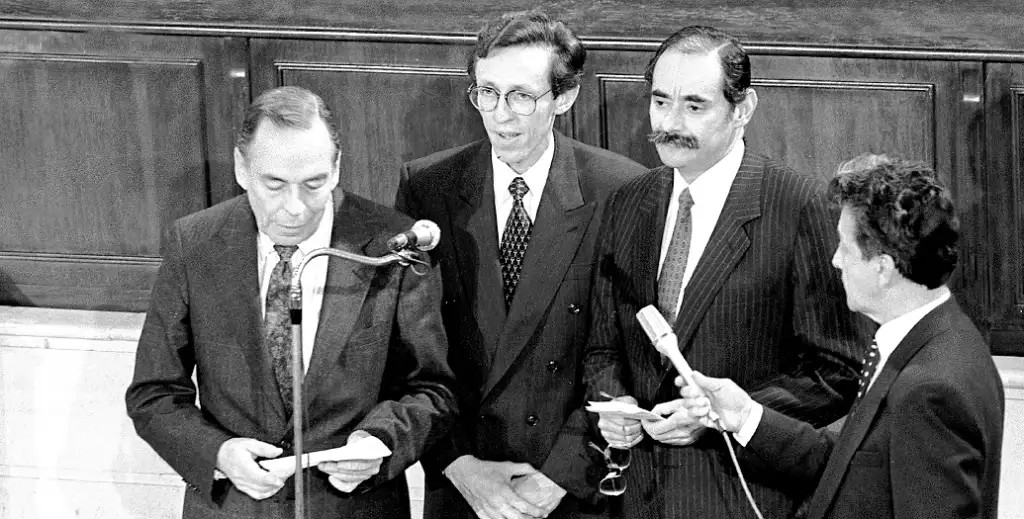
From the article, “30 Years Since the Election of the Constituent Assembly: When Colombia Voted for a New Country,” El Espectator
Photo: Constituent Assembly ARCHIVE
While I have spent more than a year now living in Colombia, I know better than to ever think that my Colombia is Colombia.
My Colombia has porters screening visitors at the front door. An elevator, grocery delivery, doctors I pay out of pocket, friends who translate, young men who appear via WhatsApp with impossible emotional timing, and a husband who has followed me through more improbable chapters of old age than either of us could have imagined. Oh, don’t get me wrong. My Colombia is real enough by any definition, but it is partial. It is gringo Colombia. Medical tourism Colombia. It is not the Colombia of a poor rural family in Chocó or a young person struggling to escape a brutally difficult life in La Guajira, or Catatumbo, where the Constitution may speak beautifully while the state’s emerging infrastructure arrives late, if at all.
This essay is about a basic human right Colombia has recognized for me, as well as every other Colombian: the right to die with dignity. I do not want to turn that into a Hallmark card for constitutional law.
This is not Encanto.
A human right proclaimed in Bogotá is not the same thing as being a constitutional right available equally to everyone who needs it in every other part of the country.
Still, I keep coming back to the same astonishment.
Colombia has given me something I was not sure I’d find: a constitutional language for the end of my life.
That was not on my short list when Michael and I came here. I did not arrive thinking, At last, a country where I may someday exercise my right to die. I came with a bad spine, a romantic imagination, too little money, too much optimism, and the vague idea that Colombia might give us a livable final chapter that I believe was and is unavailable in the U.S. I had been saying for years that I came to Colombia to die. At the time, I was expressing my intense unhappiness with my Homeland. I felt I had already lost my country, and I did not want to spend down everything else we had only to die what I call a Medicaid death.
I came here looking for one kind of story, and the country handed me another.
What keeps surprising me is not so much that Colombia is particularly “progressive,” even if it seems that way sometimes. That word is too flat to capturethe contradictions here, let alone make sense of them to my gringo mind. Colombia’s culture is Catholic-dominated, conservative, maddening, and unequal. It is capable of breathtaking compassion and stunning indifference, sometimes in the same afternoon. But again and again, I am reminded that I live under constitutional human rights that feel almost unbelievable through my gringo eyes.
My right to marry a man and to live as an openly gay man with Michael as my husband. My right to explore and experience sexuality, including sexual intimacy that touches money, without pretending moral purity has ever been the same thing as human dignity. Colombia’s Constitutional Court confirmed the validity of civil marriages between same-sex couples in 2016, after earlier decisions had pushed legal recognition forward through partnership, family, and equality rights. The Court has also recognized, in cases involving sex work, that stigma cannot simply erase labor rights, dignity, equality, or protection from discrimination.
And because Colombia is Colombia, there is always a “wait, what!?” footnote somewhere nearby. The legal imagination here sometimes wanders into places that make even social change activists like myself do a double-take. Three gay men in Medellín made headlines with a “throuple marriage.” Legal experts clarified that it was actually a “patrimonial or notarial arrangement.” Whatever the fuck that is.
If it sounds like marriage, smells like marriage, and involves a contract that looks like a marriage contract, then it has earned the right to be called marriage in the headline.
That is seasoning here, a reminder that Colombian law sometimes approaches human intimacy with a flexibility that makes American jurisprudence look as if it still uses a fax machine.
But the right to choose the time and manner of my own death?
That one was not on my short list.
To understand how and why Colombia could offer such a thing, I had to go backward into Colombia’s life before returning to my own. I hope you find the story as fascinating as I do, even if you don’t live here. I owe thanks to my AI collaborator Erasmus for bringing it to my attention.
Colombia’s modern constitutional story begins with rupture. The country’s current Constitution was born in 1991, replacing the 1886 Constitution after more than a century of political power concentrated in the rarefied atmosphere of Bogotá, following decades of violence, guerrilla conflict, drug-war terror, assassinations, institutional exhaustion, and public demand for revolutionary renewal. The student-led Séptima Papeleta movement helped push the country toward a National Constituent Assembly, elected in December 1990. No single party or political faction controlled that Assembly. Its leadership reflected the strange political mixture of the moment: Horacio Serpa of the Liberal Party, Álvaro Gómez Hurtado of the conservative-dissident Movimiento de Salvación Nacional, and Antonio Navarro Wolff of the demobilized M-19 movement served as its three presidents.
In crude American shorthand, it is tempting to say Colombia got a progressive Constitution out of a conservative Catholic country. That is not exactly wrong, but it is too neat to explain all the contradictions that make Colombia… Colombia. What the country really got was stranger: a peace document and a political compromise that became a legal laboratory.
The 1991 Constitution created or strengthened tools that would make it harder to leave human rights as mere platitudes and decoration. One of those tools was the Corte Constitucional, the Constitutional Court. It is not exactly Colombia’s Supreme Court. Colombia has several high courts. The Constitutional Court’s special job is to guard the integrity and supremacy of the Constitution, including reviewing laws and selected fundamental-rights cases.
Even more important for ordinary Colombianos is the acción de tutela.
A tutela is Colombia’s constitutional emergency button. Article 86 of the 1991 Constitution says that every person may go before a judge, at any time and place, through a preferential and summary procedure, to seek immediate protection of fundamental constitutional rights when those rights are violated or threatened by a public authority, or in some cases by private actors. The ruling is supposed to be immediately enforceable, may be appealed, and is sent to the Constitutional Court for possible review.
That is essential to understanding how the constitutional right to die with dignity that I am claiming came into existence.
A tutela is not a normal lawsuit. It is urgent — a constitutional flare gun. If a hospital, an EPS (health insurer), or another powerful actor is trampling a fundamental right, the tutela says: stop the machinery and look at the human being.
Is it abused? Almost certainly. Any tool that lets ordinary people stop the machinery will attract both desperate people and opportunists. Colombia knows this. The law and the Court have developed filters: the right must be fundamental, the harm must be current or urgent, tutela is generally subsidiary to other legal remedies unless those remedies are inadequate, and courts can reject bad-faith repetition.
But the deeper choice was not between a perfect tool and an imperfect tool. It was between an imperfect tool and leaving people trapped inside bureaucracy while their rights died politely in the waiting room.
That is why the tutela matters so much to the death-with-dignity story. A suffering person may not have years to wait for Congress to find moral courage. The body may not care that legislation is pending. Pain does not wait for committee reports.
A right without a path to exercise it is a kind of abandonment.
As I tried to navigate my own exceedingly complex journey as a foreigner, I grew curious about the suffering patient who, I assumed, first asked Colombia’s Court for the right to die. Okay, let’s be honest. I asked Erasmus, my AI collaborator, to research it for me.
I never expected what we found. No one has yet published “Dying with Dignity in Colombia for Dummies,” that I know of.
The name at the beginning of Colombia’s death-with-dignity jurisprudence appears to be José Eurípides Parra Parra. To my ears, that sounds like a name out of a Gabriel García Márqueza novel. He may be the accidental legal Patient Zero of the story. Not because he was dying. Not because he asked the Court for mercy. As far as I can tell, he opened the door by trying to close it.
That is almost too much Colombian contradiction for fiction.
In 1997, Parra Parra brought a constitutional challenge against Article 326 of Colombia’s old Penal Code, the provision dealing with homicidio por piedad — mercy killing. That law punished a person more lightly if they killed another “for mercy,” to end intense suffering from serious or incurable illness or bodily injury. Parra Parra’s challenge did not ask the Court to expand the right to die. It attacked the reduced punishment. He argued, in effect, that life was inviolable and that the law should not treat mercy killing so leniently. The case became Sentencia C-239/97, with magistrado Carlos Gaviria Díaz as the reporting justice.
A case arrived at the Court asking Colombia to treat life as absolutely sacrosanct.
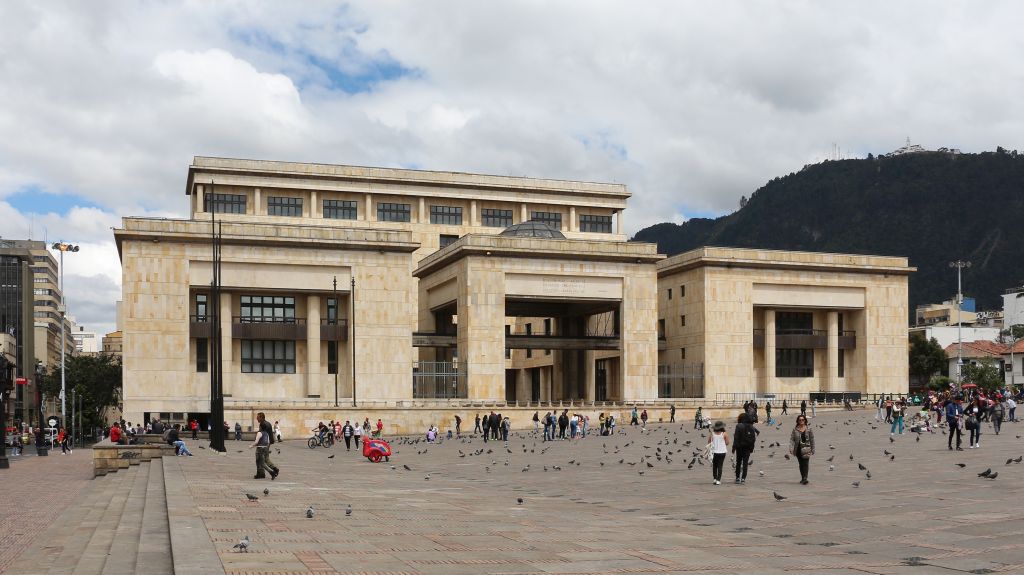
But the Court looked at the claim and found something else.
The front facade of the Palace of Justice as seen from the southeast side of Plaza de Bolívar.
Dignity.
Autonomy.
The possibility that life is not merely biological continuation.
That forcing a person to remain alive under conditions they experience as unbearable may not be moral heroism. It may be cruelty dressed up as virtue.
For me, reading reasoning that pushed back against the entrenched claim that all life is always and absolutely sacrosanct was a breath of fresh air.
In C-239/97, the Court did not say anyone could die whenever they wanted, for any reason, with anybody’s help. That is the cartoon version opponents fear. What the Court did was narrower and more profound. It held that, in the case of a terminally ill patient suffering intensely, with free consent, a doctor who acts to end that suffering should not be treated as a murderer. The Court also urged Congress to regulate the issue.
That last part matters because Congress did not, and to this day has not, rushed in to build a clean system. The right existed, but the path did not. Doctors hesitated. No, most of them flat out balked, especially outside the liberal zones of Bogotá and Medellín. To this day, in other parts of the country, including my own departamento of Santander, doctors simply shut down and refuse even to discuss the subject with their suffering patients, let alone honor their requests. Institutions resisted. Families were left to push through the moral, ethical and legal fog alone. A constitutional principle had been born, but it had not yet learned to crawl, let alone walk across a hospital floor.
Then came Julia. In 2013, she went to court to demand the right to die with dignity.
“Julia” is the pseudonym used by the Court in T-970/14, and she is one of the first human faces of this story. Her name was withheld. Julia had colon cancer, severe suffering, and had asked her EPS, Coomeva, for euthanasia. The question before the Court was whether Coomeva had violated her rights to dignified life, dignified death, and human dignity by refusing the procedure despite her request and condition.
Julia died while the case was pending.
Julia died in the gap between constitutional recognition and institutional compliance, where bureaucracies are most comfortable: not exactly saying no forever, but also not saying yes in time.
The Court still ruled because the harm could repeat itself. T-970/14 became a major step in forcing procedures to support the patient’s right. The Court ordered the Ministry of Health to issue guidance so health institutions would create interdisciplinary committees and comply with the obligations created by the decision.
This is where Colombia’s story becomes both astonishing and maddening. The right to die with dignity did not arrive as a tidy statute passed by a legislature after calm democratic debate. It emerged from suffering and litigation, against religious and institutional resistance, with the Court returning to the same basic question:
Who decides?
For years, Colombia’s answer remained tied to terminal illness. That was not nothing. It was more than many countries allow, and far more than most of the United States still allows. But terminal illness is a strangely crude gatekeeper. It imagines dying as a countdown clock. Cancer. ALS. Six months. A prognosis. A disease that has promised to kill you on a schedule the state can put into law and a doctor can certify.
Not all suffering is terminal in that clean way. Indeed, I would suggest that most of it isn’t.
Sometimes suffering arrives without a clock. It gradually shrinks your life while refusing to predict the date of your so-called natural death. It leaves you alive and legally competent, trapped inside a future you can no longer inhabit with dignity.
That is where Colombia went next.
On July 22, 2021, in C-233/21, the Constitutional Court removed the terminal-illness barrier that is common in many recently passed death-with-dignity laws in U.S. states. The Court held that there is no homicide by mercy when the act is performed by a doctor, with the patient’s free and informed consent, and the patient suffers intense physical or psychological suffering arising from serious and incurable illness or bodily injury.
That is the sentence that has found me.
Colombia has hardly built a frictionless system where suffering people are gently accompanied through a clear and compassionate process. Please. This is still Colombia. Nothing here is frictionless except maybe a mango sliding off a plate while you’re trying to slice it.
But the now-established precedent is enormous.
The suffering belongs to the person suffering. Period.
The Court did not eliminate doctors, criteria, consent, review, or regulation. It did not turn death into a consumer service. But it did something that feels morally sound, if not radical, to me: it refused to make terminality the only doorway to medically supervised euthanasia. It recognized that a human being may reach the end of a dignified life before the body reaches the end of all biological possibility.
And yes, this includes foreigners like me. Colombia’s rules allow foreign residents to request euthanasia, provided we can document at least a year of uninterrupted domicile here. I have made Colombia my home for more than a year. That matters legally, too. There are still medical requirements to meet and a review to go through. But being a gringo does not, by itself, put me outside the protection of this right.
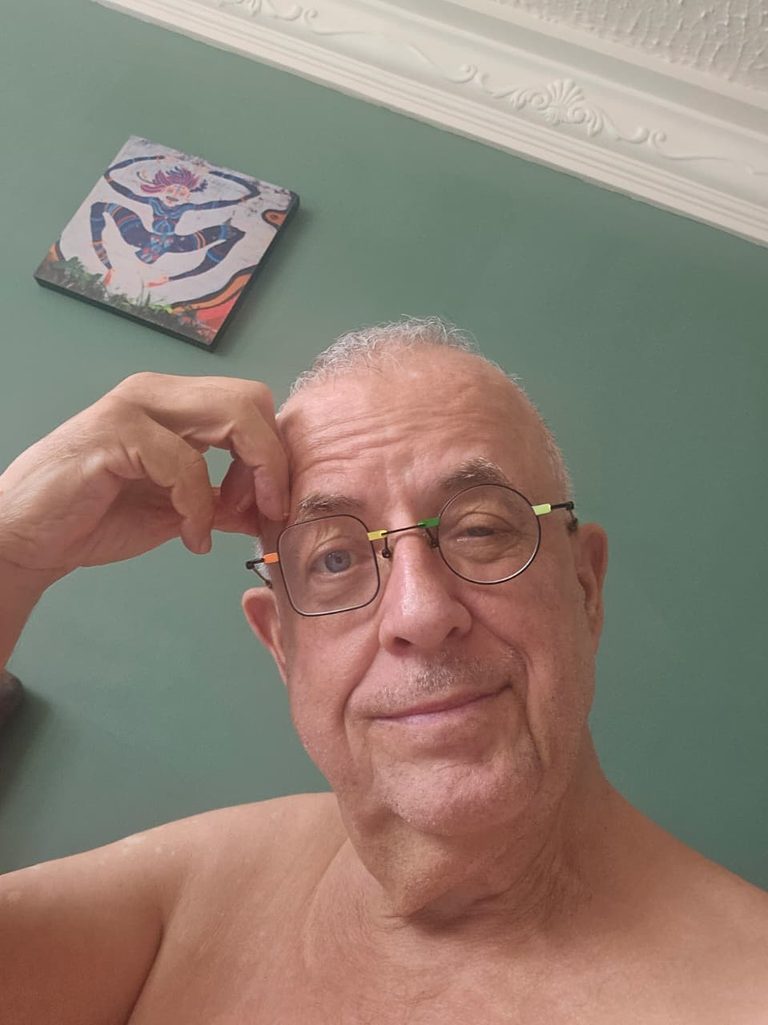
That is my situation today, and has been for weeks, if not months. I am not writing this as a neutral observer from a constitutional law library. I am writing as a person in pain, living in Colombia, trying to understand the moral, legal and constitutional ground beneath my feet before I leave it. I am writing as someone who has spent most of his life wanting the world to become fairer than it is. I wanted the world to make more room for queer people, poor people, anyone who fell outside whatever narrow category was being treated as normal that decade.
Now, at the end of my life, I find myself face to face with one more question of fairness:
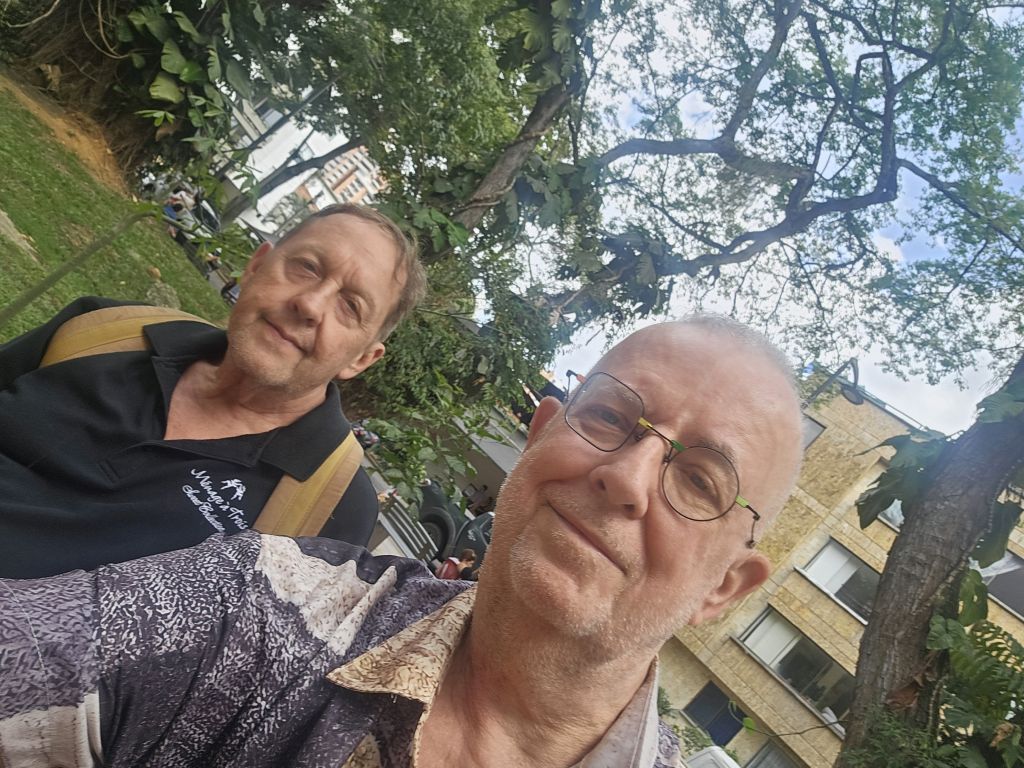
Who owns my suffering?
Who owns my pain?
There are people who would answer quickly: God owns it. The state owns it. Medicine owns it. Anyone, apparently, except the person who wakes up inside it every morning.
Colombia’s Court did not go as far as absolute personal sovereignty over death. Medical criteria and legal review still apply. And in C-164/22, the Court extended the constitutional landscape to medically assisted suicide under similarly defined conditions: medical participation, free and informed consent, and intense physical or psychological suffering arising from serious and incurable illness or bodily injury. Corte Constitucional
That distinction matters to lawyers. Euthanasia and medically assisted suicide are not the same thing. In euthanasia, the doctor performs the act that causes death. In medically assisted suicide, the patient performs the final act with medical assistance. For many people, the moral distinction is enormous. For others, it is narrower. For me, the terminology matters less than the recognition beneath it: there are circumstances in which the law should not treat a competent person’s chosen death as a crime, a pathology, or a scandal.
Compared with the United States, the contrast is striking. The Oregon-style death-with-dignity model generally requires that a person be an adult, capable of making health-care decisions, and diagnosed with a terminal illness expected to lead to death within six months. Oregon removed its residency requirement in 2023, but the six-month terminal-illness requirement remains central to the law. Vermont’s statute uses similar six-month terminal-condition language.
In the U.S. the question is often: are you dying soon enough, in the right jurisdiction, in the right way, with the right diagnosis?
The question for people like me living in Colombia, after C-233/21, is different: are you suffering intensely from a serious and incurable illness or bodily injury, are you making a free and informed decision, and does dignity require that the law stop treating biological survival as the only acceptable answer?
That difference is not academic to me.
It is the difference between being told, “Your pain is terrible, but you are not dying correctly,” and being asked, “What does dignity mean inside your actual life?” My answer is the only one that matters.
There are still barriers. Of course there are.
A court can write dignity into doctrine, but a doctor still has to answer the phone. A suffering person still has to assemble medical records, permissions, and translations, and find people to help while also being sick enough to need the right in the first place. Colombia’s Ministry of Health has issued procedural rules for euthanasia requests and interdisciplinary committees, and those rules themselves exist because Court decisions had to be made operational.
This is where any romantic version of the story has to stop and bow its head, if not bend a knee to the State.
That a legal, constitutional right exists is not the same thing as equal access to that right. Some parts of Colombia do not merely lack a specialist willing to discuss euthanasia. They lack reliable roads or hospitals, sometimes even basic safety. People still live there. Make love there. Eat, drink, shit, and die there. The Constitution may speak in Bogotá, but the question is always whether anyone can hear it at the end of the road.
In 2024, Bogotá and Medellín accounted for 296 of Colombia’s 352 officially recorded euthanasia procedures, or 84.1%. The entire rest of the country combined accounted for only 56.
My Colombia is not Colombia.
That is why I cannot write this as if Colombia has solved death.
Colombia has noterased suffering or magically transformed medicine into compassion.
And Colombia has certainly not made its most beautiful human rights equally available to all Colombians.
But in this gringo’s eyes, Colombia has done something extraordinary. Through its Constitutional Court, through cases that began in contradiction and continued through grief, the country has begun to recognize that a life worth living cannot be reduced to a heartbeat alone, and that the person living the suffering has moral authority over it.
That is the gift.
And yes, I know how loaded that word is. Gift. It sounds too pretty for something involving pain, illness, fear, Michael, and the practical logistics of what happens to a body after a life ends. Too many details remain unresolved for me to pretend certainty. I am not writing a manual or inviting anyone to choose what I choose.
I am saying that Colombia has given me a legal and moral possibility I did not know I would need or want.
I have yet to have someone who truly knows me say, “You must not do this.” Some have said they would not choose it for themselves. That is different. Some have been frightened. Some have been sad. Some have gone quiet because what the hell does anyone say to a friend who tells you they are prepared to die? But the people close enough to see the whole picture have not responded by asking, let alone commanding me to stay alive for their comfort.
One dear Colombian friend told me, “Your choice becomes my choice, because you’re my family and my love.”
That is not indifference. That is love doing one of the hardest things love can do: refusing to turn its own fear into a command.
Our culture is not good at that.
Our culture is very good at preventing death in the most literal sense. Keep the heart beating. Keep the lungs moving. Then call that compassion.
Sometimes it is compassion. I want to be clear about that. If someone is standing at the edge of an impulsive act, if someone is trapped inside a moment that might pass if interrupted, then interrupt. Please. Interrupt. The hotline should exist. The human hand should reach.
But not every conversation about chosen death is that conversation.
A culture that cannot distinguish between impulsive self-destruction and a competent adult seeking a lawful, medically supervised death after prolonged suffering is not protecting life. It is protecting itself from complexity.
I do not expect everyone to understand my decision. Some people I love would never choose it for themselves. I can accept that. What matters is whether they can accept that I may choose differently.
There are still pill bottles on the table next to my computer. There is a walker nearby. There is coffee growing cold. My own path is not settled, and recognizing my right has not relieved me of the work of trying to exercise it.
But it matters that I can have this conversation with a doctor and ask for something my adopted country recognizes as a right. I do not have to begin by persuading an entire country that the question is legitimate. Other people fought that battle before I knew I would have reason to thank them.
I came here hoping Michael and I could afford a life we wanted to live. Now I am trying to understand how that life might end for me. Colombia has given me a say in that.
That is a gift I could not have understood when we arrived.
Who decides?
I do.