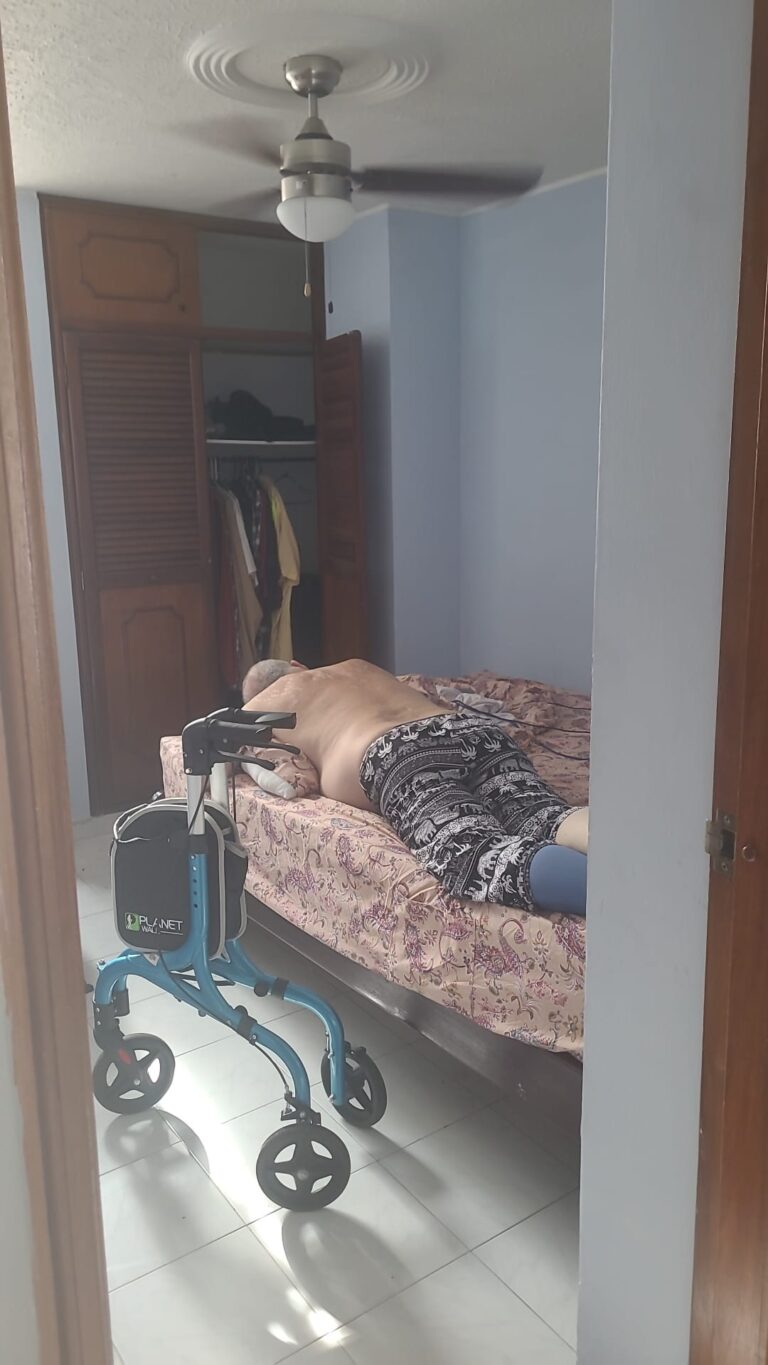
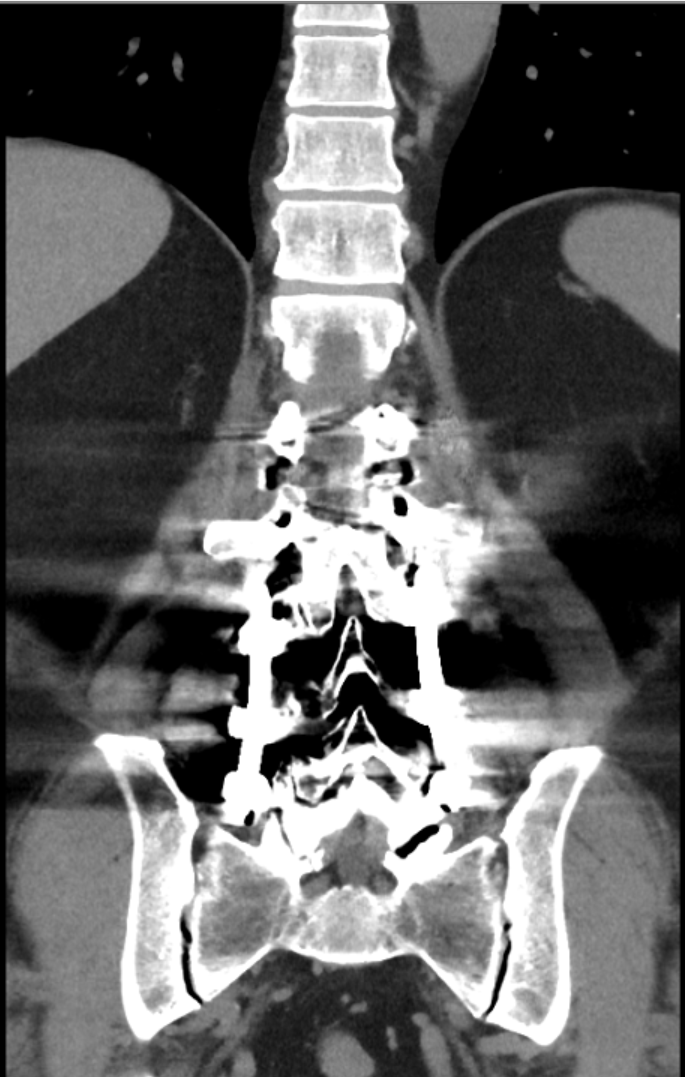
Quick clarification (because this matters):
This post is not about leaving Colombia or “moving back to the U.S.”
This is a border run — a temporary exit required by visa timing — with a practical stop in Florida. From there, Michael continues on to Kansas City for a few weeks to house-sit and see friends and family, while we plan and expect to return to Colombia as soon as the paperwork allows.
Colombia is still the plan. This is just a bureaucratic detour.
A visa snag, a border-run, and the absurd geography of uncertainty
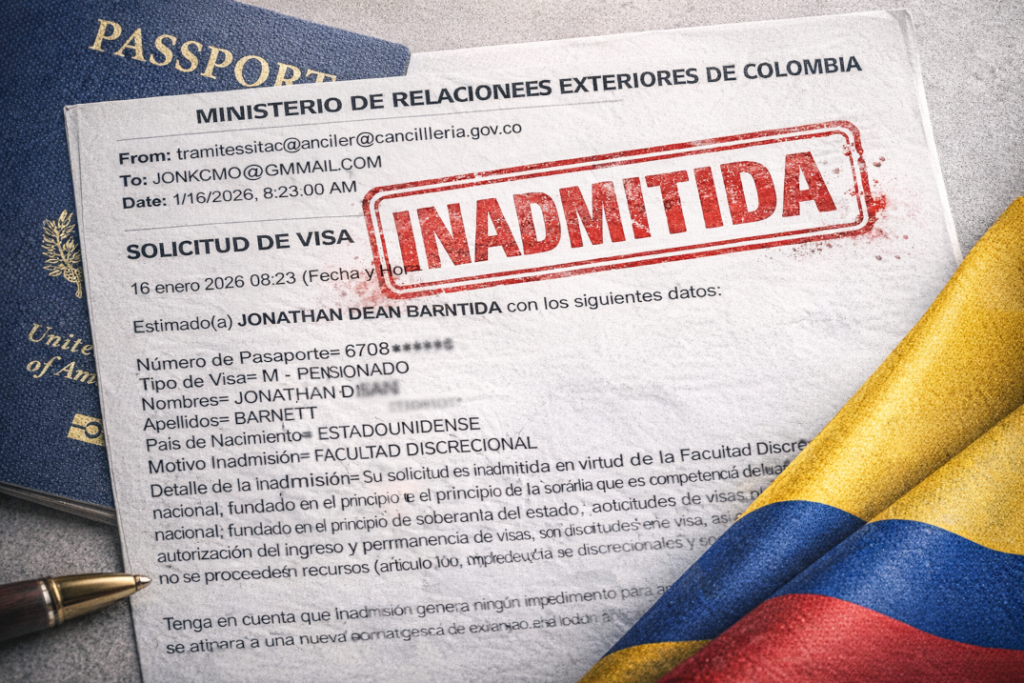
This was supposed to be routine.
In December, Michael and I initiated what we assumed would be a normal visa process so that we can remain in Colombia legally — paperwork, supporting documents, waiting, the usual bureaucratic grind. We weren’t tourists passing through. We’ve been building a life in Colombia with real intention.
Then one of those technical problems that should be small — the kind of thing that should be fixed by a phone call and a form — turned into a bureaucratic knot that immigration systems love and human beings hate.
The root cause of all that followed was a bad choice on my part. I was persuaded to enroll in a health plan in a way that later conflicted with visa requirements. I now believe I was likely misled — maybe not maliciously, but through ignorance or incomplete understanding of how visa rules for foreigners intersect with health system registration. The people who sell these products aren’t necessarily thinking like visa officers. They’re thinking like salespeople.
That “bad choice” proved to be serious enough to cost me sleep, because government systems don’t just record data — they record their version of reality. When those versions don’t match across databases, the applicant becomes the shock absorber.
So, what happened to the application?
Our visa application was not approved.
It also wasn’t denied in the ordinary sense — not a neat “you failed requirement X” rejection.
Instead, it was inadmitida. Not admitted for processing. Closed out. Removed from the pipeline.
This is where foreigners lose their minds, because Cancillería — and individual visa reviewers — have broad discretionary authority. In many cases, they are under no legal obligation to explain themselves. People can seemingly do everything right and still be refused their visa, and never learn why. I’ve read about that for years in online groups, and it’s just as maddening as advertised.
To make things worse, the decision landed exactly when our current legal status was expiring — forcing us into an immediate scramble for a Plan B.
The border-run idea arrives: “don’t focus on the problem”
This is where the story shifts from paperwork into psychology.
Our visa adviser Elias — in his practical Colombian way — offered a solution-oriented frame that I immediately recognized as sensible, and yet terrifying at the same time:
“I don’t like to focus on the problem, let’s try to see the solution.”
The proposed solution? How about a little jaunt to the border with Venezuela — Cúcuta — to stamp both passports? Same day, or spend one night in a hotel and return.
I forwarded that message to our best bilingual friend Jackson, who until recently lived in Cúcuata, for review. At first, Cúcuta didn’t feel like geopolitics. It felt like another bureaucratic errand.
Cúcuta wasn’t being presented to us as one option among many. It was framed as the obvious path — arguably the only one worth discussing.
The mood shift: anxiety + militarization
Then reality hit the nervous system.
I wrote to Jackson that we hadn’t decided, that we depended on him and Elias for advice — and I added something that ended up becoming central to the whole narrative:
Mikey is much more nervous about it than I am.
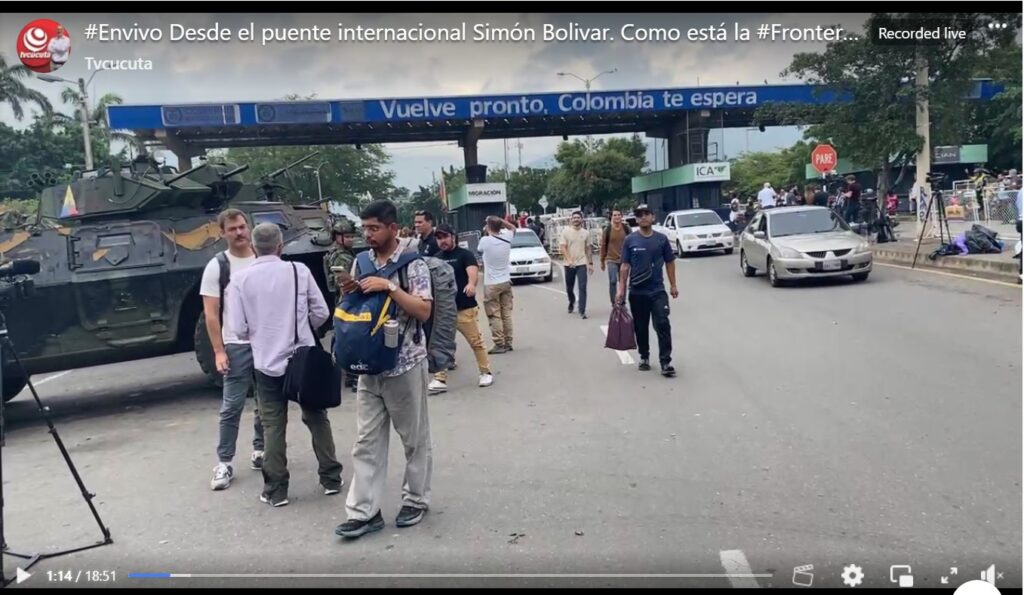
border crossing with Venezuela in Cúcuta, Colombia.
That sentence is basically the heart of the story. This isn’t just “me managing paperwork.” It’s a long-term married couple negotiating fear — one calm(ish), one alarmed — while trying to protect a life we’ve worked hard together to build.
I also told Jackson that my own feelings of an optimistic adventure had shifted after seeing videos about increased security at the Venezuelan border — and even talk that it had been closed for a while. Suddenly this wasn’t just a stamp run. It was a risk calculation.
And then came a line in our chat that shows how quickly the geopolitical world leaked into our little domestic crisis:
Everything changed when Trump kidnapped Maduro, but left the regime in power.
It was at that point where you can feel the “paperwork story” mutate into something darker — because now we’re not just reviewing bus schedules. We’re choosing borders in a moment when borders feel… sharp.
Jackson’s reality check: “You’re gringos, so…”
Jackson answered with the kind of blunt practicality you want from a friend who should know:
- Venezuela was not more stable — it felt more dangerous.
- People were anxious.
- And the key line: we’re gringos.
Then he gave two immediate alternatives:
- Go for the Venezuela option anyway.
- Consider a cheaper flight to Lima, Peru.
That exchange is crucial because it shows the moment when “one simple plan” became a increasingly branching tree of imperfect options.
The line that came later — and why it landed
Much later, after all that context, I wrote to Jackson:
Gringos making a border run to the country where our country kidnapped their president a few weeks ago.
Sure. What could possibly go wrong?
That line wasn’t a random snark grenade. It was the endpoint of the arc:
- from “solution mindset”
- to “wait, what are we doing?”
- to “Mikey is nervous”
- to “the border might be militarized”
- to “you’re gringos”
- to “sure, let’s just stroll into Venezuela like tourists in a postcard”
Dark humor is often what shows up when the mind is trying to contain anxiety without breaking.
The options — simplified
At this stage, we were staring at the map like it was a Medicare neuropsych exam.
- Cúcuta / Venezuela: close, cheap, fast — but politically charged and psychologically daunting.
- Ecuador: longer travel, potentially calmer, could even be “touristy” rather than frantic.
- Panama: predictable and clean, but expensive.
- Peru / Lima: another possible reset option with cheaper flights.
This list mattered because it revealed something uncomfortable:
It’s not just paperwork that determines your future — it’s geography, money, health, and fear tolerance. Upon further research, each option presented it’s own downside, some more serious than other.
Ecuador, for example would be relatively straightforward… if we flew into Quito and did our business at the airport. The land crossing, accompanied by a friend living in Pasto, who I have wanted to meet for year? Show us certified reports showing no criminal background from every country you’ve lived in for the past five years!
The new twist: the path of least resistance may be… the USA
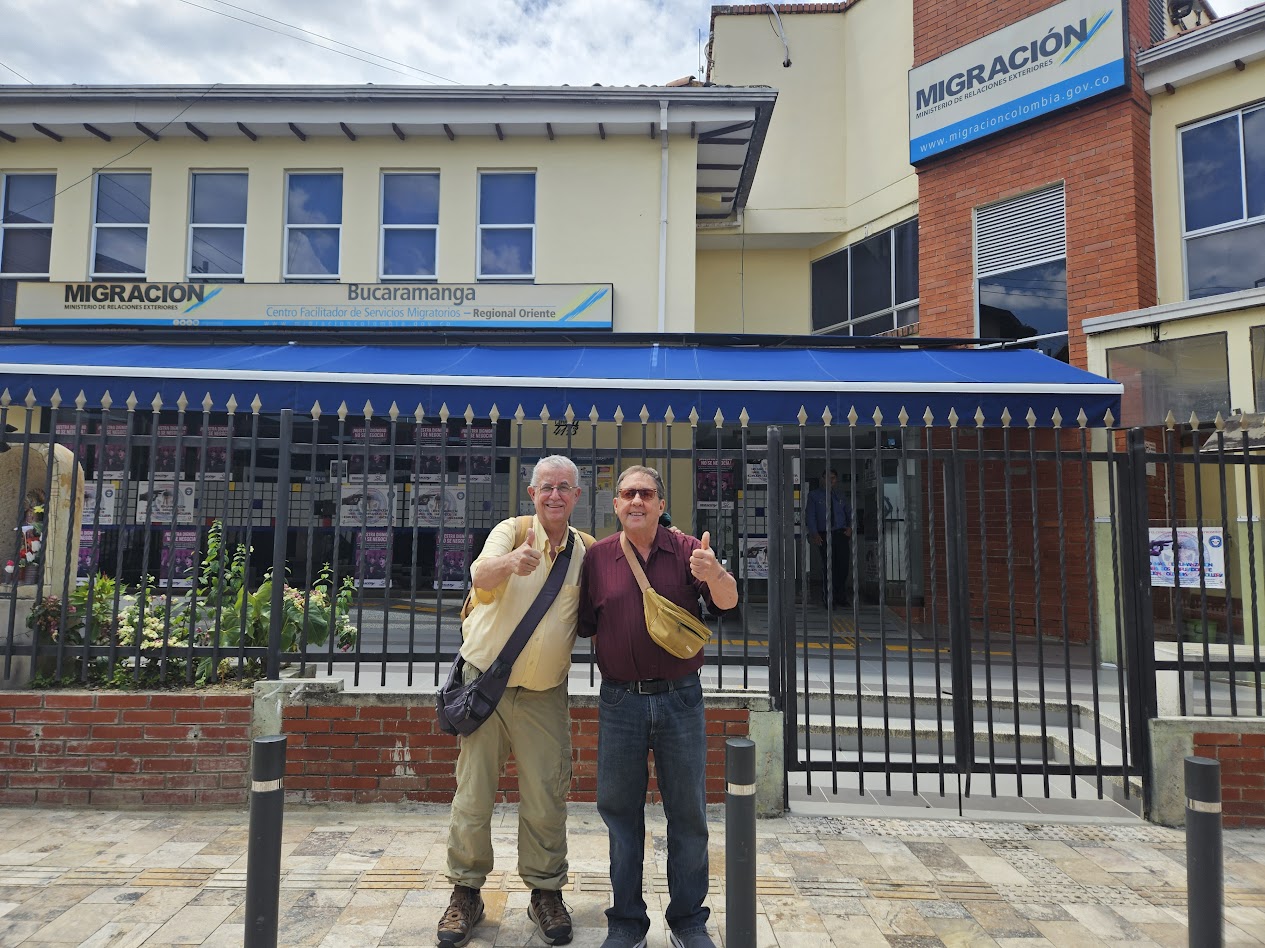
And now comes the twist I still don’t quite know how to laugh at.
After all this talk of Venezuela — of all places — we’re currently considering the possibility that the easiest option just might be for us to return briefly to the USA.
Which is ironic enough to deserve its own paragraph.
Because if Venezuela represented danger in the mind — unpredictability, authoritarian vibes, militarization — then the USA increasingly represents its own version of instability: the “new Venezuela,” only further north. Not a left-wing strongman like Maduro, but a right-wing wannabe dictator with better marketing and a deeper grip on institutional levers.
So yes: our story may end with us “escaping Venezuela” by returning to the USA.
Look, Dorothy.
We may actually be going back to Kansas.
Where this leaves us
This is not a story about hating Colombia. Colombia is the place we chose, and frankly we do not regret that choice or we wouldn’t be trying to get new visas, would we?
This is more a story about what it feels like when the legal scaffolding of your life suddenly goes wobbly — and you realize how quickly “home” can become conditional.
And it’s a reminder that immigration isn’t just about documents.
It’s about nerves.
It’s about health.
It’s about couples.
It’s about fear.
And sometimes it’s about studying Google maps with two passports, wondering which border feels least likely to bite you.